France
Film: ‘The Art Dealer (L’antiquaire)’
The Art Dealer (L’antiquaire) is a beautiful 2015 French film about a young Parisian woman portrayed by Anna Sigalevitch. She’s searching for paintings stolen from her Jewish family during WWII.
Louis-Do de Lencquesaing who is in the hit French series Spiral does a nice job portraying the woman’s husband.
The cinema-photography is excellent and the slow uncovering of unflattering facts reveals what war brings out in human nature even among those not in power.
Toulouse: Light, Stone, and the Quiet Confidence of a Great City
Toulouse doesn’t shout. It doesn’t need to. France’s fourth-largest city has a way of revealing itself slowly—through the glow of its pink brick at sunset, the hum of its cafés, the youthfulness of its streets, and the golden light that pours across the Garonne River as if the whole city has turned its face toward the sun.
I had the privilege of visiting Toulouse as part of a group organized and led by Sarah Diligenti, Executive Director of the Alliance Française of Washington. She is a native of Toulouse, and her affection for the city is contagious. As a long-time member of the Alliance, it was a joy to see her hometown through her eyes. The experience felt less like tourism and more like being welcomed into someone’s place in the world.
The Beautiful Light Along the Garonne
If Paris has the Seine and Lyon the Rhône, Toulouse has the Garonne—and its light is different. Warmer. Wider. More relaxed.
Stand along the Quai de la Daurade in the late afternoon and you’ll see why photographers adore this river. The sun drops low, raking the facades of old brick warehouses and convents, and the water turns a deep metallic blue. The dome of La Grave seems to float. Couples sit on the steps. Friends carry bottles of wine. Life takes on a certain softness.
The Garonne begins high in the Spanish Pyrenees at the Pla de Beret and flows 529 kilometers northward through southwestern France before merging with the Dordogne to form the Gironde estuary, eventually emptying into the Atlantic near Bordeaux. Toulouse grew because of this river—because of its trade, its silt, its life—and the city still orients itself toward it.
Place du Capitole: A Stage Set of Grandeur
Every visitor eventually drifts toward the Place du Capitole, the city’s true living room.
Place du Capitole at sunrise. Toulouse’s city hall and theatre stretch across the square in rose and cream — regal but never pompous.
The square is enormous—regal without being pompous. Its pale stone surface reflects the sky, and the façade of the Capitole, Toulouse’s town hall and theatre, stretches across an entire block like a Renaissance stage set painted in rose and cream.
Sit with a coffee and watch the square turn from morning bustle to afternoon languor. At night it becomes cinematic: couples posing under the arcades, groups of students weaving past, street musicians tuning their guitars. Sarah brought us here first, as if to say: this is where the pulse of the city can be felt.
If you want to understand Toulouse’s confidence, start here.
Couvent des Jacobins: Light You Don’t Expect
From the outside, the Couvent des Jacobins is easy to miss—just another brick wall on a quiet street in a city full of brick walls. But step inside and everything changes.
The light is astonishing.
The light here is unlike any other Gothic space in Europe — quiet, weightless, and unforgettable.
Columns rise like palm trees, splitting the vault in a pattern unlike any other Gothic space in Europe. Sunlight filters through tall windows and dances across the floor, illuminating the famously delicate “palm tree” column that seems to hold the heavens together. The effect is both austere and uplifting—one of those places where the air feels different, as though centuries of contemplation have seeped into the stone.
It is a place you stumble into once and remember forever.
A City of Students—and Their Energy
Toulouse is often called La Ville Rose for its pink brick, but it could just as easily be called La Ville Jeune. It is one of the largest student cities in France—home to over 100,000 university students across institutions like the University of Toulouse, Toulouse 1 Capitole, Toulouse II Jean Jaurès, and the renowned engineering school, INSA.
This youthful energy is everywhere: in the packed terraces, in the narrow streets around Place Saint-Pierre, in the late-night laughter that spills out of wine bars. The city feels alive because its average age is young—and because young people shape its rhythm.
Toulouse at Night: A Mood All Its Own
After dark, Toulouse becomes reflective.
Lanterns glow under the arcades. The river absorbs the city’s lights and sends them shimmering back. The soundscape softens—just footsteps, distant music, the hum of a bicycle. Something about the combination of brick, shadow, and sky makes your mind wander. It is a place that invites thought, memory, and stories.
The night feels gentle yet filled with possibility—like a city that understands both its past and its future.
Notre-Dame de la Dalbade: A Quiet Gem
Visitors often overlook Notre-Dame de la Dalbade, but it deserves a moment.
Named for its once-white facade (la dalbade meaning “whitewashed”), the church stands in the Carmes district and is crowned with one of the most striking ceramic tympanums in France—a vividly colored Last Supper that seems impossibly bright against the brick surrounding it.
Inside, the church has a deep stillness. Sunlight falls in thin beams across the nave, revealing a space filled with the scent of wood and incense. It’s the kind of place that makes you slow down without realizing it.
Marché Victor Hugo: The Beating Heart of the City
If you want to understand how well Toulouse eats, go to Marché Victor Hugo.
It is crowded—in the best way. Fishmongers calling out the day’s catch. Butchers slicing lamb and duck confit with practiced precision. Cheese counters overflowing with pyramids of chèvre, sheep’s milk tommes, and wheels of Roquefort. Produce stacked in brilliant color.
This is not a tourist market. It is where Toulousains shop, gossip, argue, flirt, and order a glass of wine upstairs before lunch. Even if you buy nothing, the atmosphere is irresistible.
The Majesty of Saint-Sernin
And then there is Basilique Saint-Sernin, one of the greatest Romanesque churches in Europe.
The nave of Basilique Saint-Sernin, one of the great Romanesque churches of Europe. Columns and arches draw the eye toward the light.
Its octagonal bell tower rises above the low roofline of the city like a compass point. The church was once a major stop on the pilgrimage route to Santiago de Compostela, and its size reflects that history—immense, solid, welcoming.
Inside, the columns and arches draw your eyes forward, as if the whole building wants you to move toward the light at the apse. It feels ancient in the deepest, most dignified way.
Toulouse Stays With You
Toulouse isn’t the first French city many travelers think of—but perhaps that’s why it feels so rewarding. It has beauty without pretense, history woven into daily life, and a warmth—of people, of light, of brick—that stays with you long after you leave.
It’s a city that doesn’t need to impress you. It simply does.
I left with the quiet glow of having been there, and the pleasure of seeing a city through the pride and affection of someone who calls it home.
The Terrible Towel Going to Paris
The Pittsburgh Steelers are heading to France! 🏈🇫🇷
As part of the NFL’s 2026 international lineup, the Steelers will play the New Orleans Saints in the first-ever regular season game in Paris. The historic matchup is scheduled for Sunday, October 25, 2026, at the Stade de France.
Kickoff is set for 2:30 PM local French time (9:30 AM ET). Check out the full Steelers 2026 Schedule for more details.
Toulouse: Light, Stone, and the Quiet Confidence of a Great City
Warm light, quiet streets, rose-colored stone — and a feeling of grace everywhere.
👉 Read the post:
www.dhescrpt.com/toulouse-…
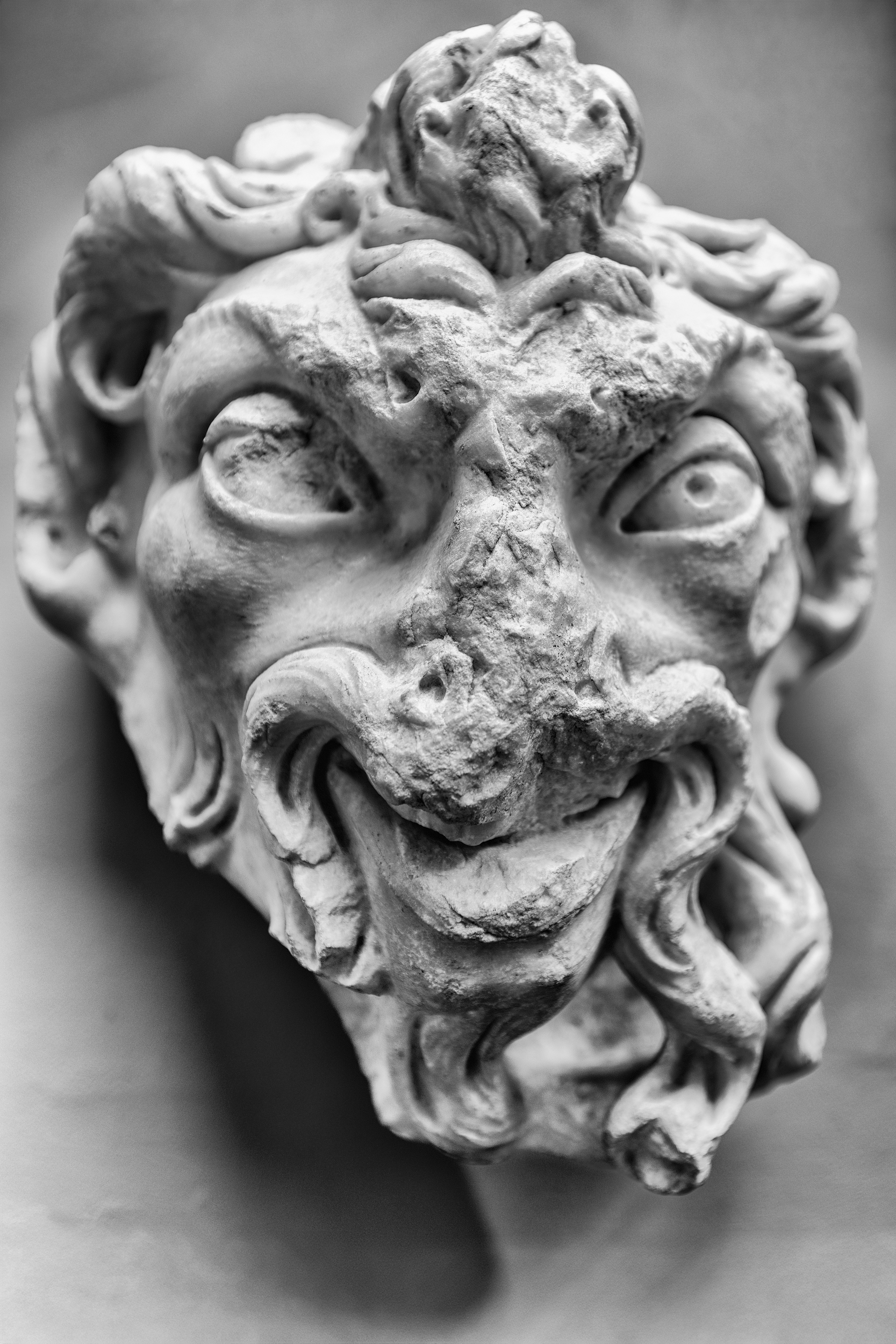
Musée Saint-Raymond, Toulouse
EN: Photographed at the Musée Saint-Raymond in Toulouse, this expressive sculpted head once adorned a Roman building or fountain. The museum, housed in a 16th-century college beside the Basilica of Saint-Sernin, is dedicated to archaeology and the ancient civilizations of southwestern France, particularly the Gallo-Roman city of Tolosa. Its collection preserves the traces of daily life, art, and belief from antiquity — reminders of how the human face and imagination endure across millennia.
FR: Photographié au Musée Saint-Raymond à Toulouse, ce visage sculpté, à l’expression à la fois ironique et troublante, ornait autrefois un édifice ou une fontaine romaine. Installé dans un ancien collège du XVIᵉ siècle, à côté de la basilique Saint-Sernin, le musée est consacré à l’archéologie et aux civilisations antiques du sud-ouest de la France, notamment à la ville gallo-romaine de Tolosa. Sa collection retrace la vie, l’art et la pensée du monde antique — témoignage de la permanence du visage humain à travers le temps.
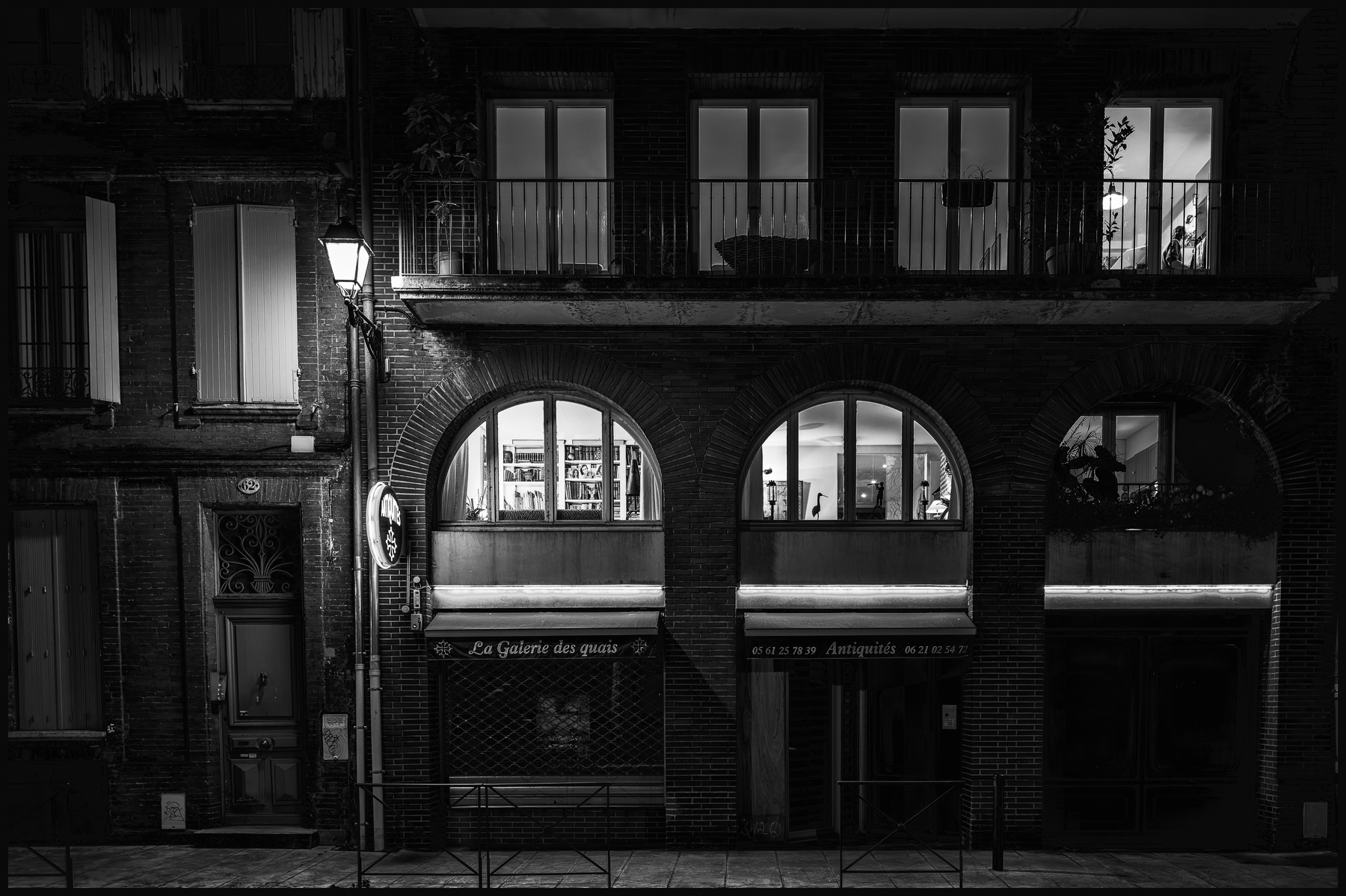
Windows of the Night – Toulouse - Fenêtres de la nuit
EN: In the quiet streets of Toulouse, the closed shops give way to illuminated windows, revealing fragments of private lives. Between darkness and light, the city tells its hidden stories.
FR: Dans les rues silencieuses de Toulouse, les boutiques closes laissent place à des fenêtres illuminées, dévoilant des fragments de vies intimes. Entre ombre et lumière, la ville raconte ses histoires cachées.
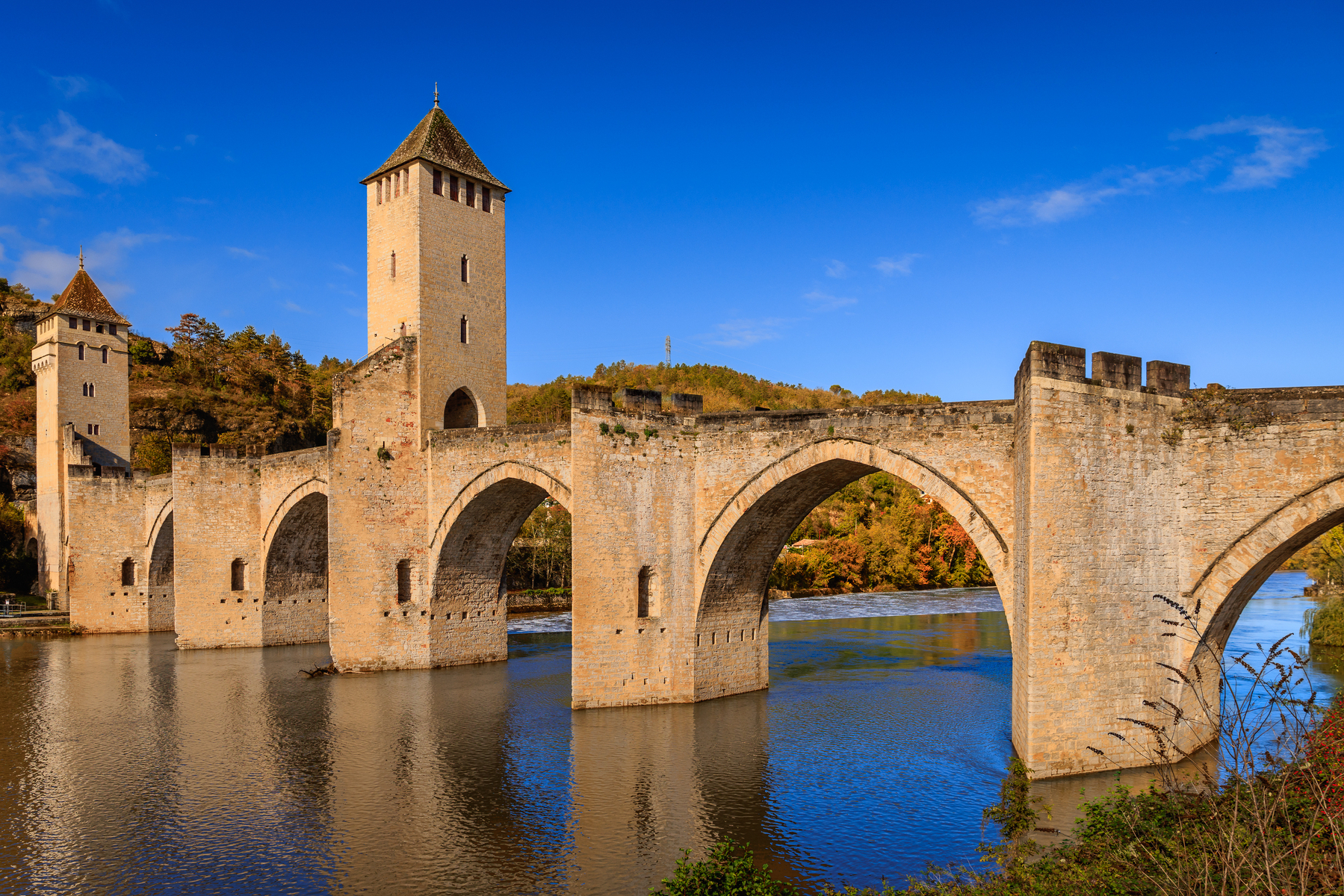
Pont Valentré, Cahors
EN: Spanning the Lot River since the 14th century, the Pont Valentré is one of France’s finest fortified medieval bridges. With its six arches and three towers, it stood as both a defensive structure and a symbol of Cahors’ prosperity. Legend tells that the architect, desperate to finish the bridge, made a pact with the Devil — a tale now inseparable from its identity.
FR: Depuis le XIVᵉ siècle, le pont Valentré enjambe le Lot et demeure l’un des plus beaux ponts fortifiés médiévaux de France. Avec ses six arches et ses trois tours, il était à la fois ouvrage défensif et symbole de la prospérité de Cahors. La légende raconte que l’architecte, désespéré de l’achever, conclut un pacte avec le diable — une histoire devenue indissociable de son identité.
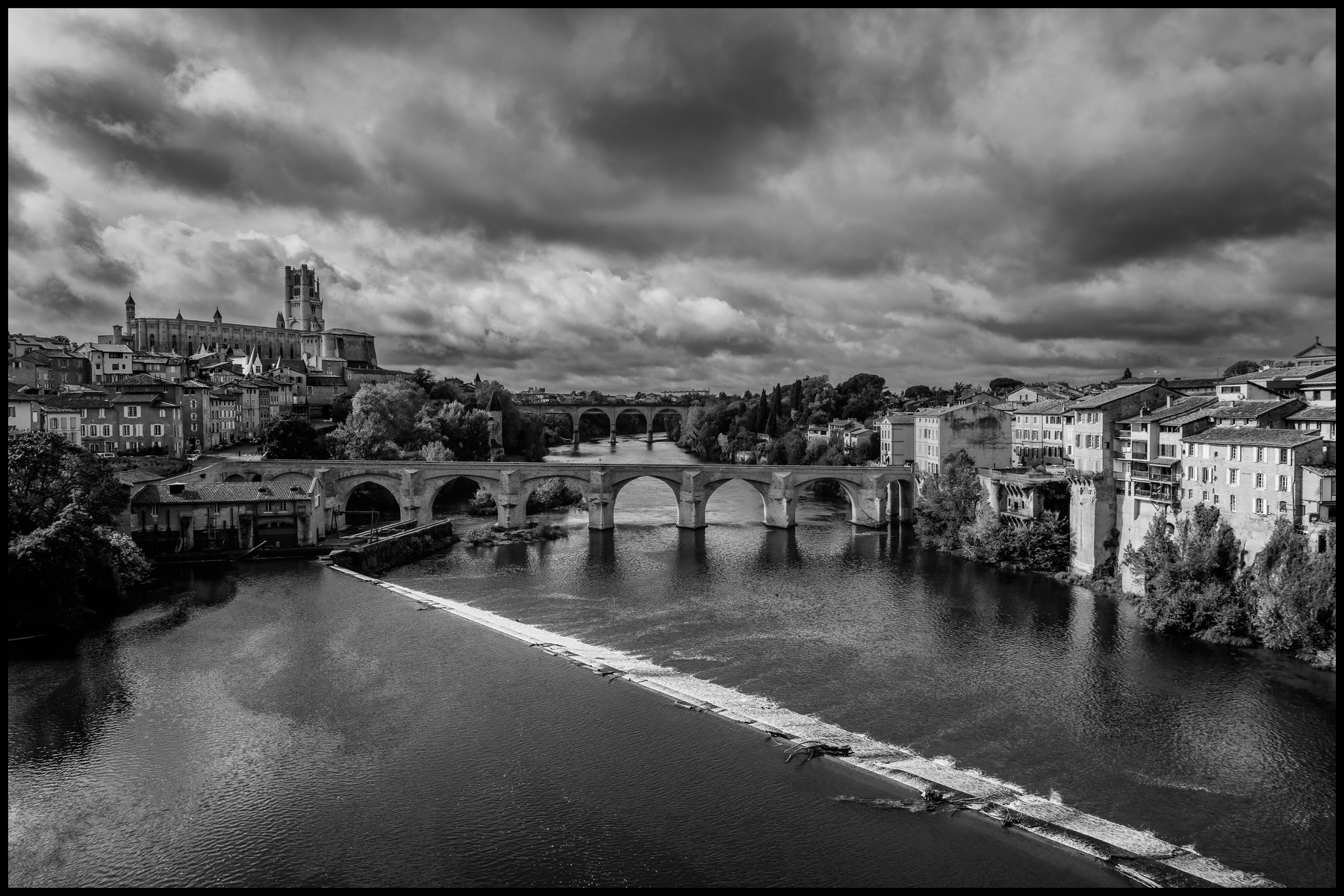
Albi, France
EN: In Albi, the Tarn flows beneath the Pont Vieux, a medieval bridge from the 11th century. Rising above the town is the Cathedral of Sainte-Cécile, the world’s largest brick cathedral and a symbol of the city’s enduring faith and history.
FR: À Albi, le Tarn s’écoule sous le Pont Vieux, pont médiéval du XIᵉ siècle. Dominant la ville, la cathédrale Sainte-Cécile, plus grande cathédrale de brique au monde, incarne la puissance et la mémoire de la cité.
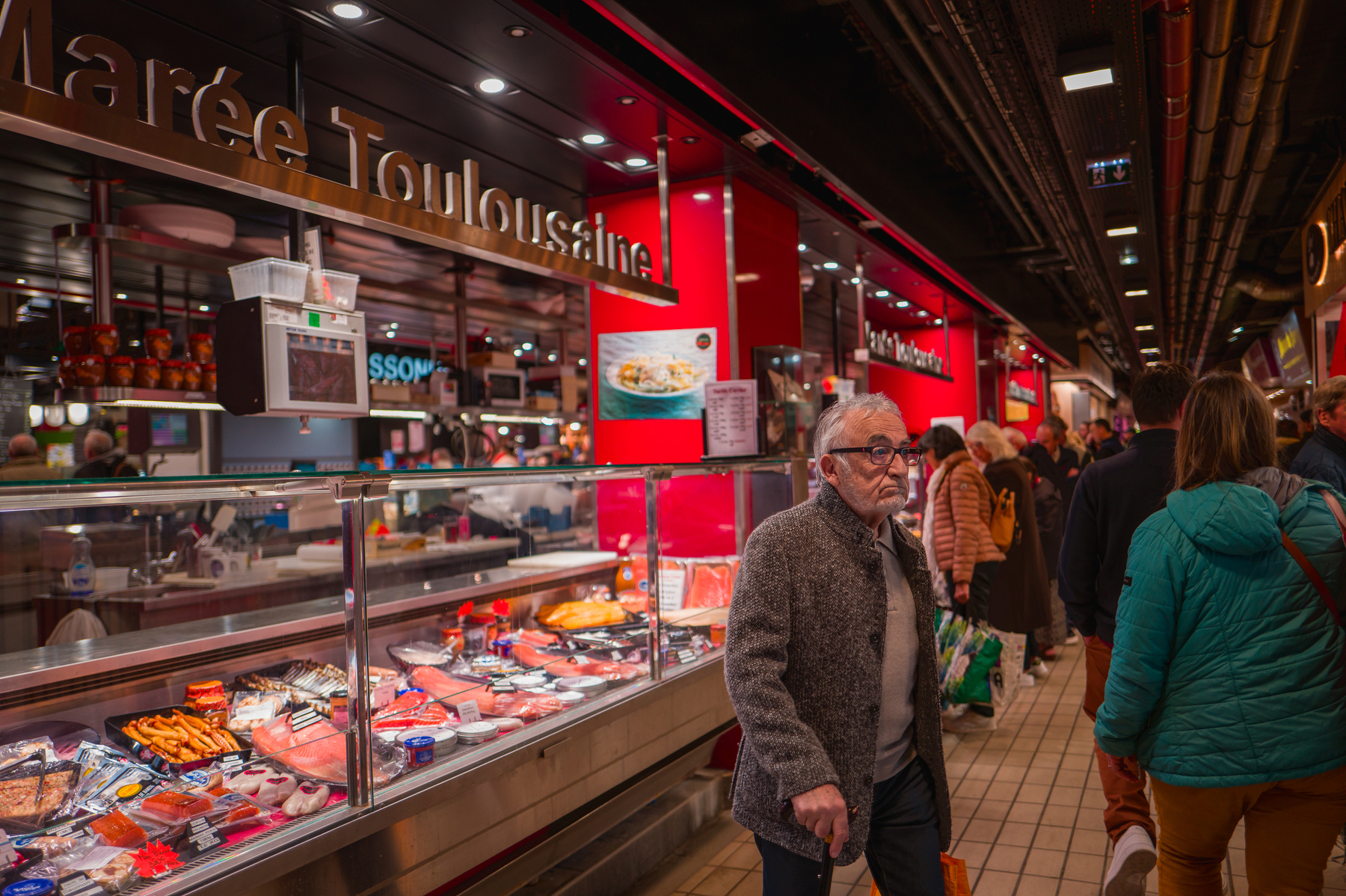
Tradition in Motion – Marché Victor Hugo, Toulouse Tradition en mouvement – Marché Victor Hugo, Toulouse
EN: Opened in 1896 and rebuilt in the 20th century, the Marché Victor Hugo remains the beating heart of Toulouse’s culinary life. Generations of vendors and customers gather here daily, weaving together tradition and modernity. With its vibrant red stalls and overflowing counters, it reflects both the city’s history and its ongoing passion for gastronomy.
FR: Ouvert en 1896 et reconstruit au XXᵉ siècle, le marché Victor Hugo demeure le cœur battant de la vie culinaire toulousaine. Depuis des générations, commerçants et clients s’y retrouvent chaque jour, mêlant tradition et modernité. Avec ses étals rouges éclatants et ses comptoirs bien garnis, il reflète à la fois l’histoire de la ville et sa passion toujours vivante pour la gastronomie.
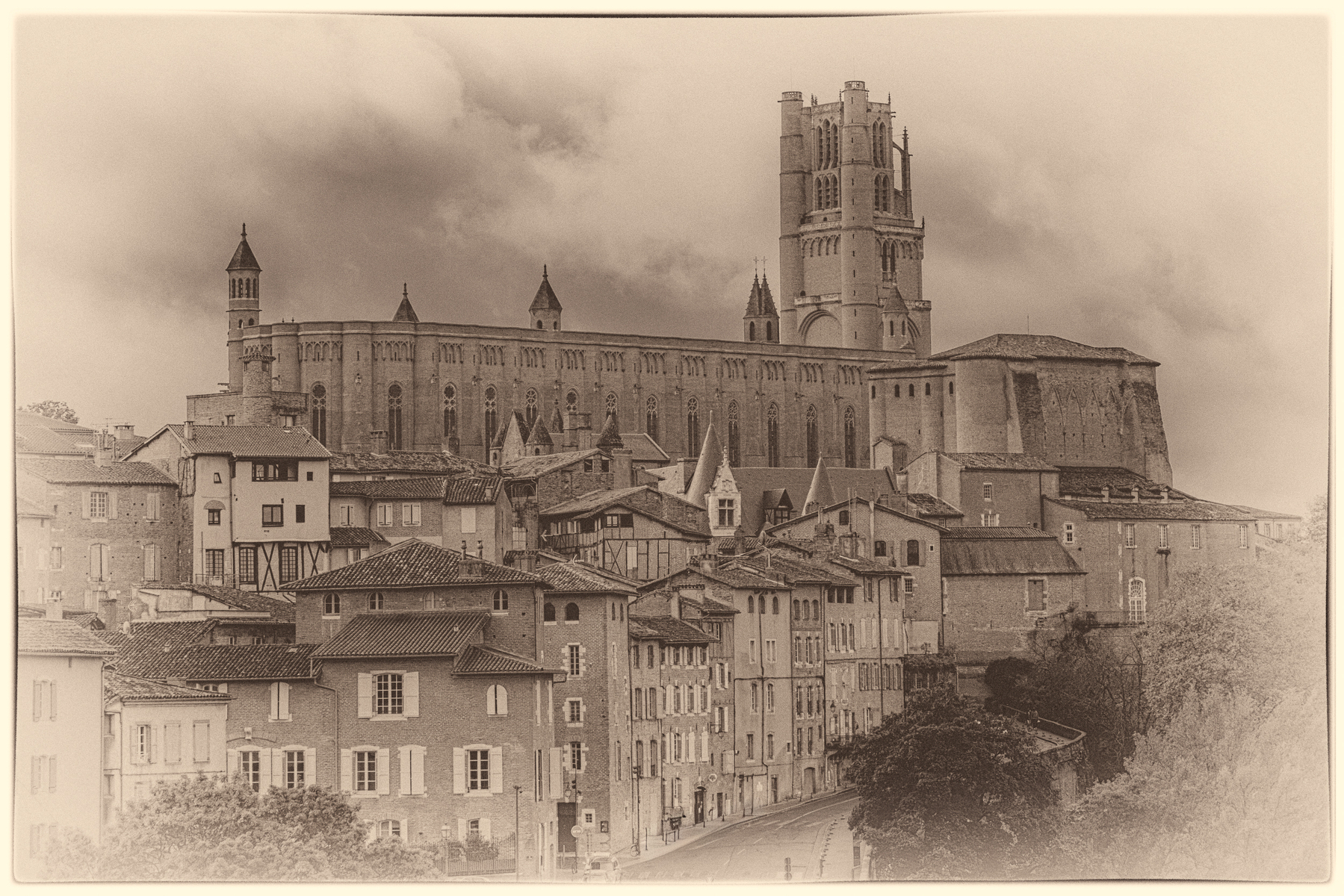
Cathédrale Sainte-Cécile – Albi
EN: The Cathedral of Sainte-Cécile rises above the old town of Albi, a masterpiece of southern Gothic architecture built entirely of brick. The sepia tones recall its enduring presence through the centuries.
FR: La cathédrale Sainte-Cécile domine la vieille ville d’Albi, chef-d’œuvre du gothique méridional entièrement construit en brique. Le ton sépia évoque sa présence immuable au fil des siècles.
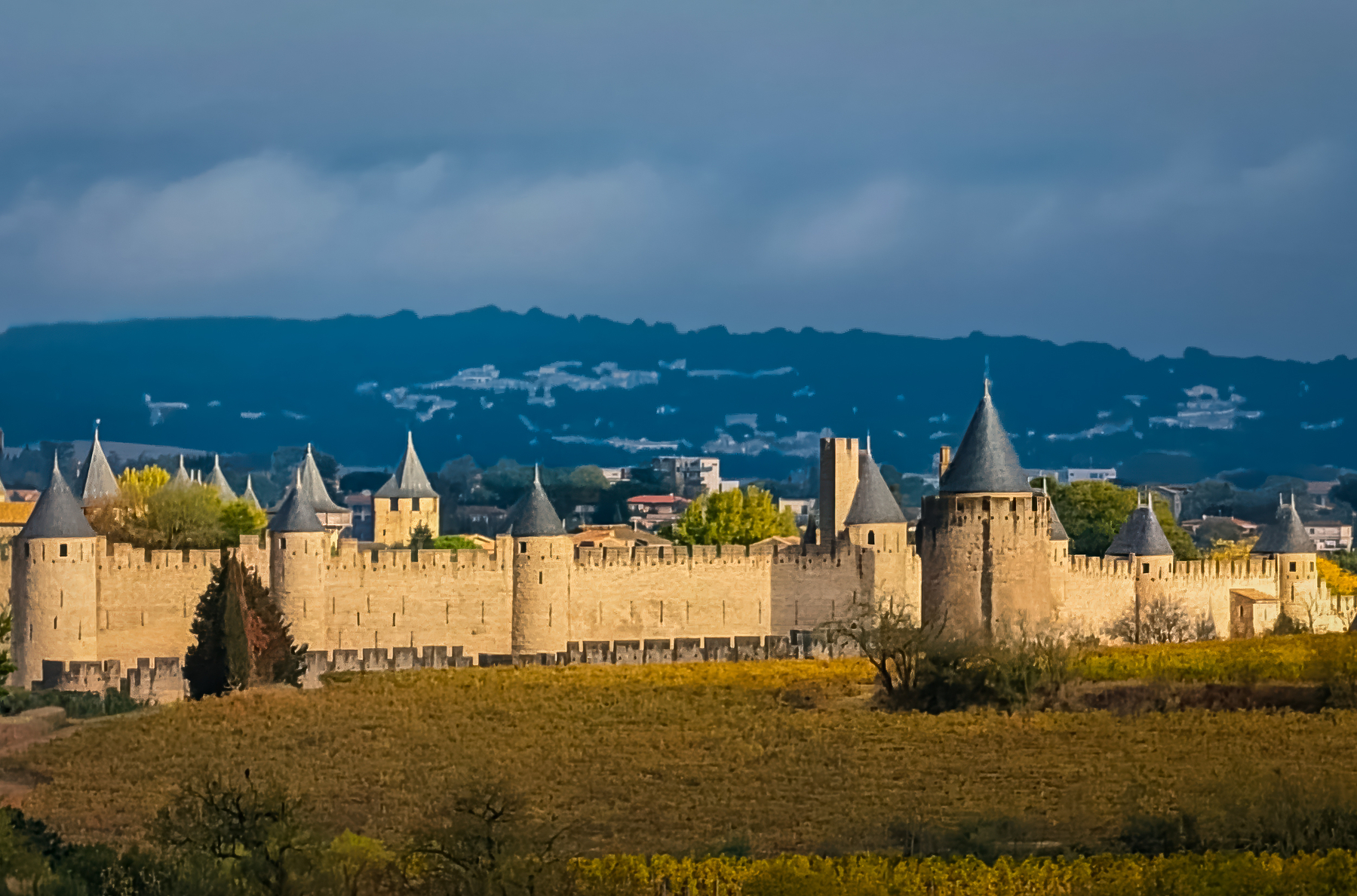
Carcassonne
EN: Carcassonne, a UNESCO World Heritage Site in southern France, is famed for its medieval double walls and 52 towers. Restored in the 19th century, the fortress rises from the landscape like a vision — stone glowing against the weight of sky, a living echo of Europe’s medieval past.
FR: Carcassonne, inscrite au patrimoine mondial de l’UNESCO dans le sud de la France, est célèbre pour sa cité médiévale fortifiée, protégée par des doubles remparts et 52 tours. Restaurée au XIXᵉ siècle, la forteresse se dresse dans le paysage telle une apparition — la pierre illuminée sous la lourdeur du ciel, résonance vivante du passé médiéval de l’Europe.
The Capitole of Toulouse - Le Capitole de Toulouse
EN: First established in the 12th century as the seat of the capitouls (municipal magistrates), the Capitole is the historic symbol of Toulouse’s civic authority. Its neoclassical brick-and-stone façade, completed in 1750, presides over the Place du Capitole. Today it houses both the city hall and the Théâtre du Capitole, uniting history, politics, and culture in the heart of the “Pink City.”
FR: Édifié à partir du XIIᵉ siècle comme siège des capitouls (magistrats municipaux), le Capitole est le symbole du pouvoir communal de Toulouse. Sa façade néoclassique en brique et pierre, achevée en 1750, domine la place du Capitole. Aujourd’hui, il abrite l’hôtel de ville et le théâtre du Capitole, mêlant histoire, politique et culture au cœur de la « Ville Rose ».
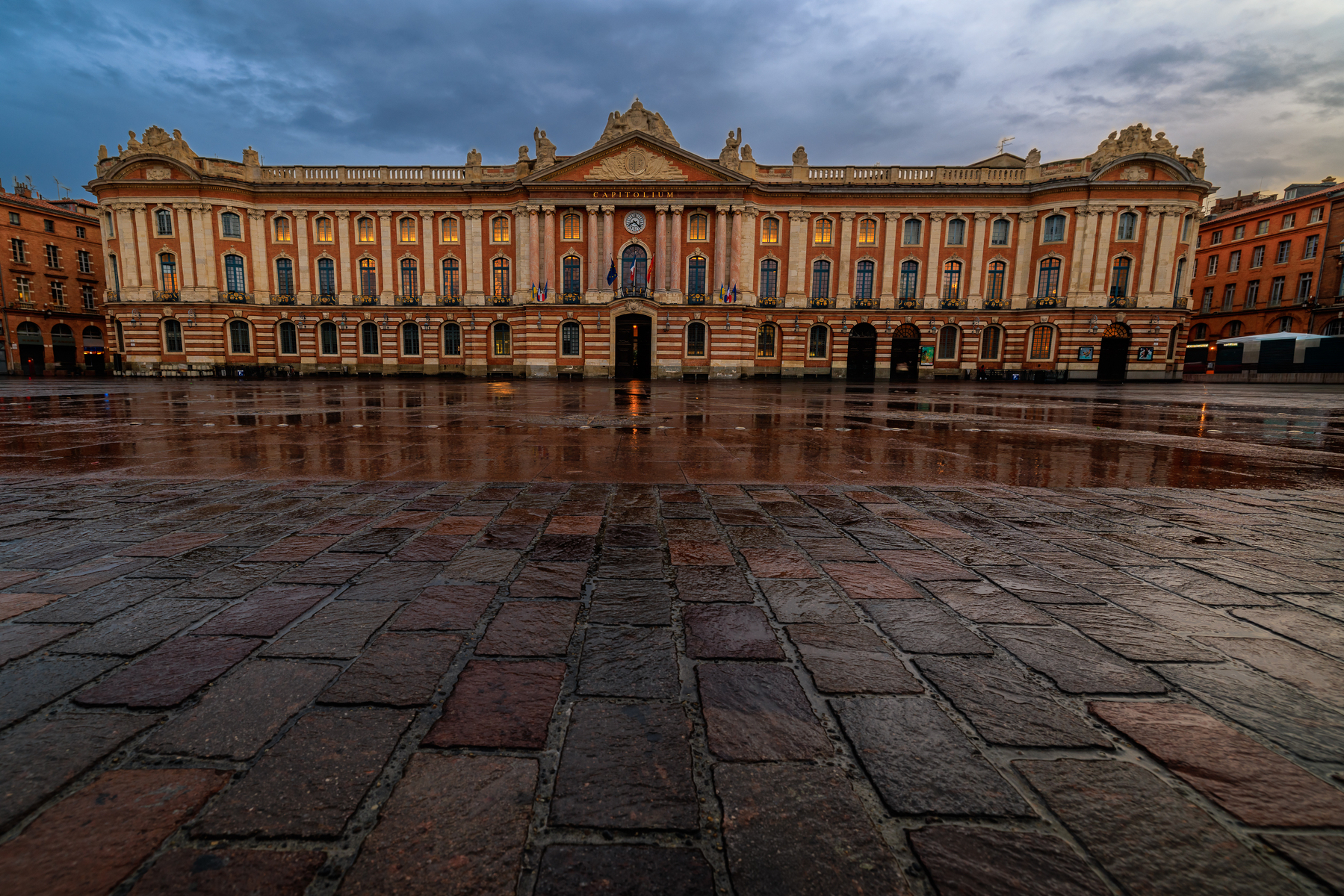
Blue Hour on the Garonne, Toulouse - Heure bleue sur la Garonne, Toulouse
EN: Reflections of the Hôtel-Dieu Saint-Jacques, the Dome of La Grave, and the Pont Saint-Pierre glow along the Garonne at twilight. Once home to hospitals and pilgrims, these landmarks now stand as enduring symbols of Toulouse, the “Ville Rose.”
FR: Reflets de l’Hôtel-Dieu Saint-Jacques, du Dôme de La Grave et du pont Saint-Pierre illuminant la Garonne au crépuscule. Jadis lieux d’accueil pour les malades et les pèlerins, ces monuments demeurent aujourd’hui des symboles emblématiques de la « Ville Rose ».
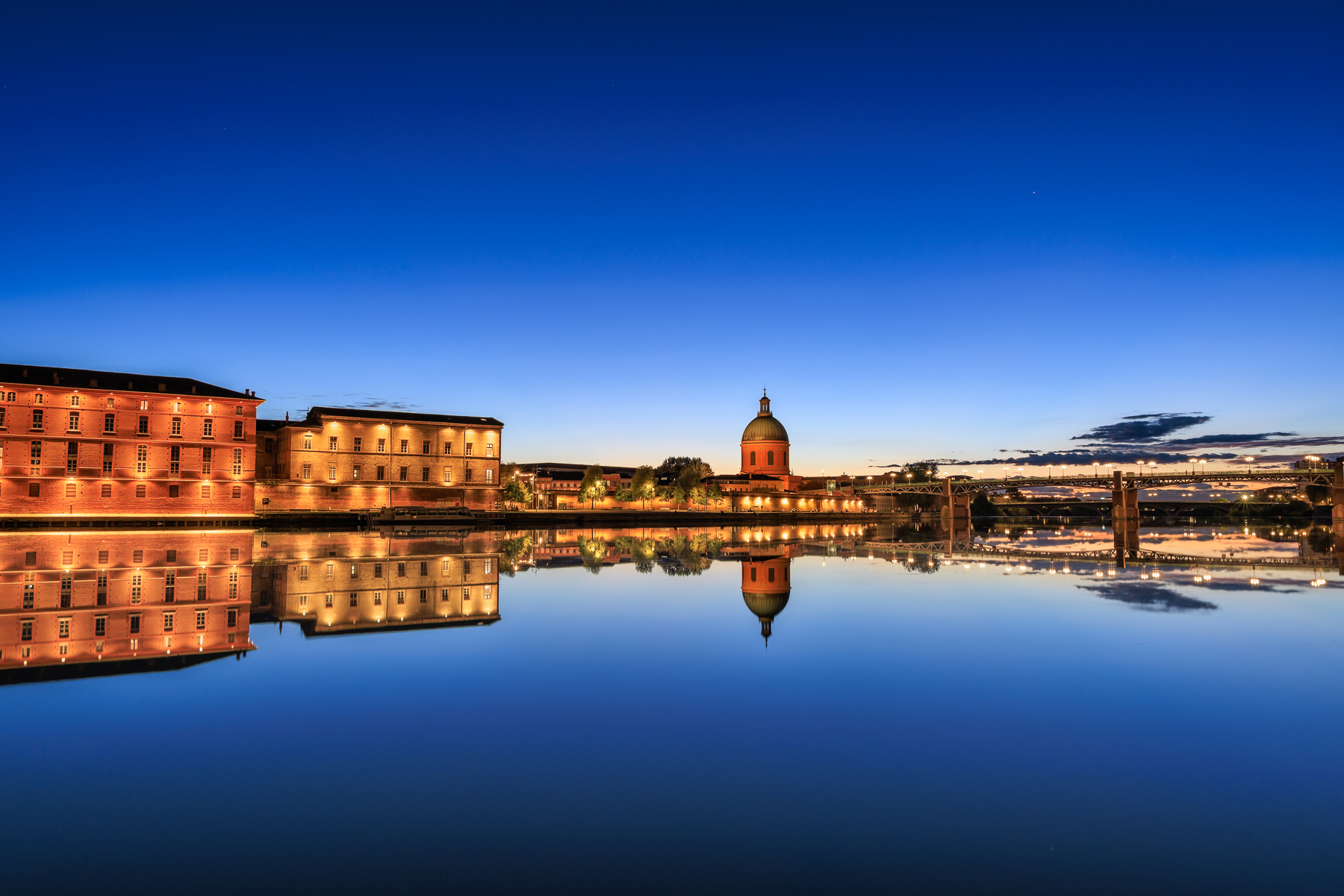
Flowers in the Basilica of La Daurade, Toulouse - Fleurs dans la basilique de la Daurade, Toulouse
EN: Fresh flowers placed inside the Basilica of Notre-Dame de la Daurade, with votive candles glowing in the background.
FR: Des fleurs fraîches déposées dans la basilique Notre-Dame de la Daurade, avec les cierges allumés en arrière-plan.
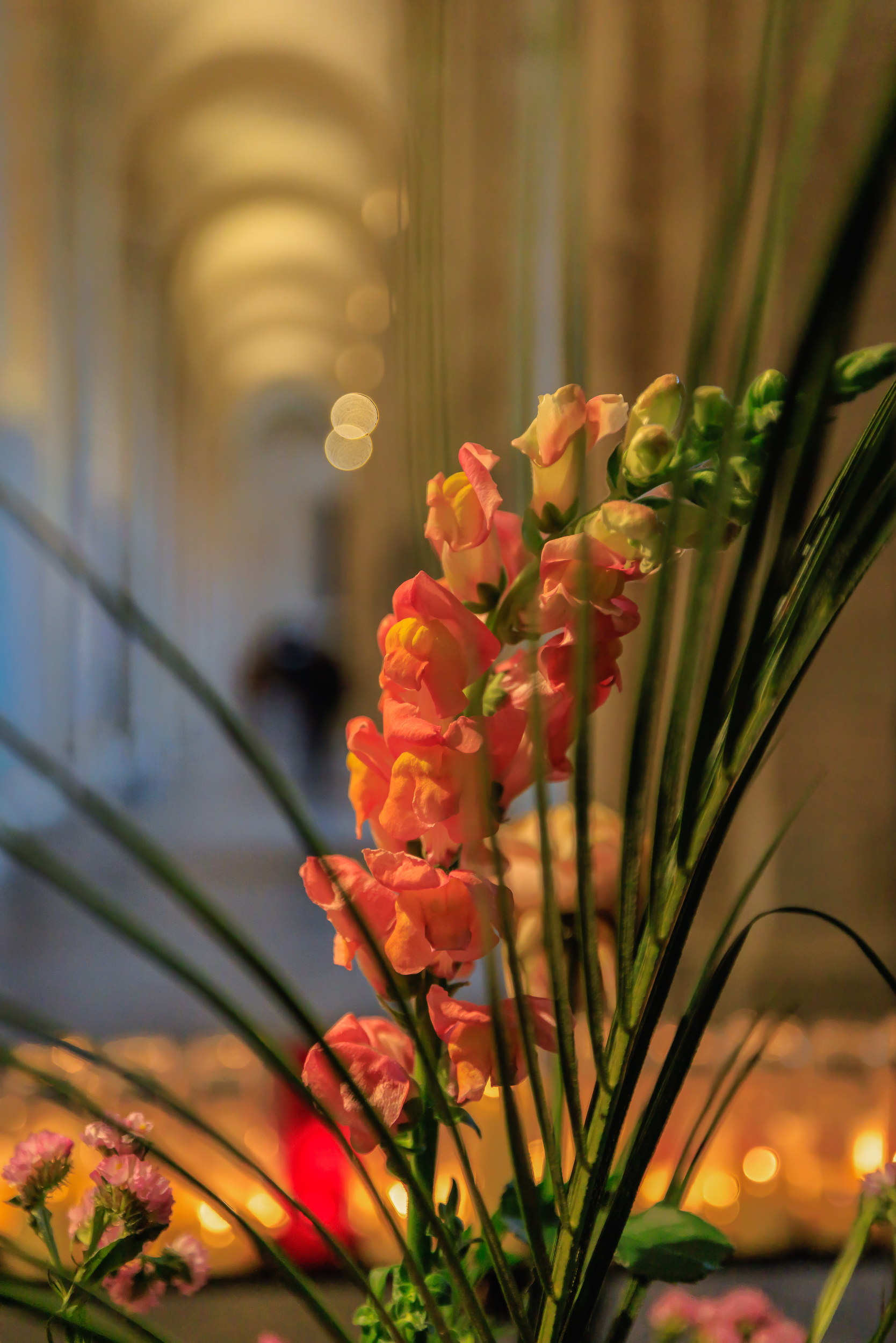
The Black Madonna of La Daurade, Toulouse - La Vierge Noire de la Daurade, Toulouse
EN: Venerated since the Middle Ages, the Black Madonna of Notre-Dame de la Daurade is one of Toulouse’s most important Marian figures. Shown with the Child beneath a protective mantle, she is linked to the safeguarding of the city and the boatmen of the Garonne. Like the Black Madonna of Częstochowa in Poland, she belongs to a wider European tradition in which these dark icons symbolize divine mystery, closeness to the people, and the promise of protection. Their color, sometimes born of centuries of patina, also evokes the depth and eternity of faith.
FR: Vénérée depuis le Moyen Âge, la Vierge Noire de la basilique Notre-Dame de la Daurade est l’une des figures mariales les plus emblématiques de Toulouse. Représentée avec l’Enfant sous un manteau protecteur, elle est associée à la protection des habitants et des marins de la Garonne. Comme la Vierge noire de Częstochowa en Pologne, elle s’inscrit dans une tradition européenne où ces icônes sombres symbolisent à la fois le mystère divin, la proximité avec le peuple et la promesse de protection. Leur couleur, née parfois de la patine du temps, évoque aussi la profondeur et l’éternité de la foi.
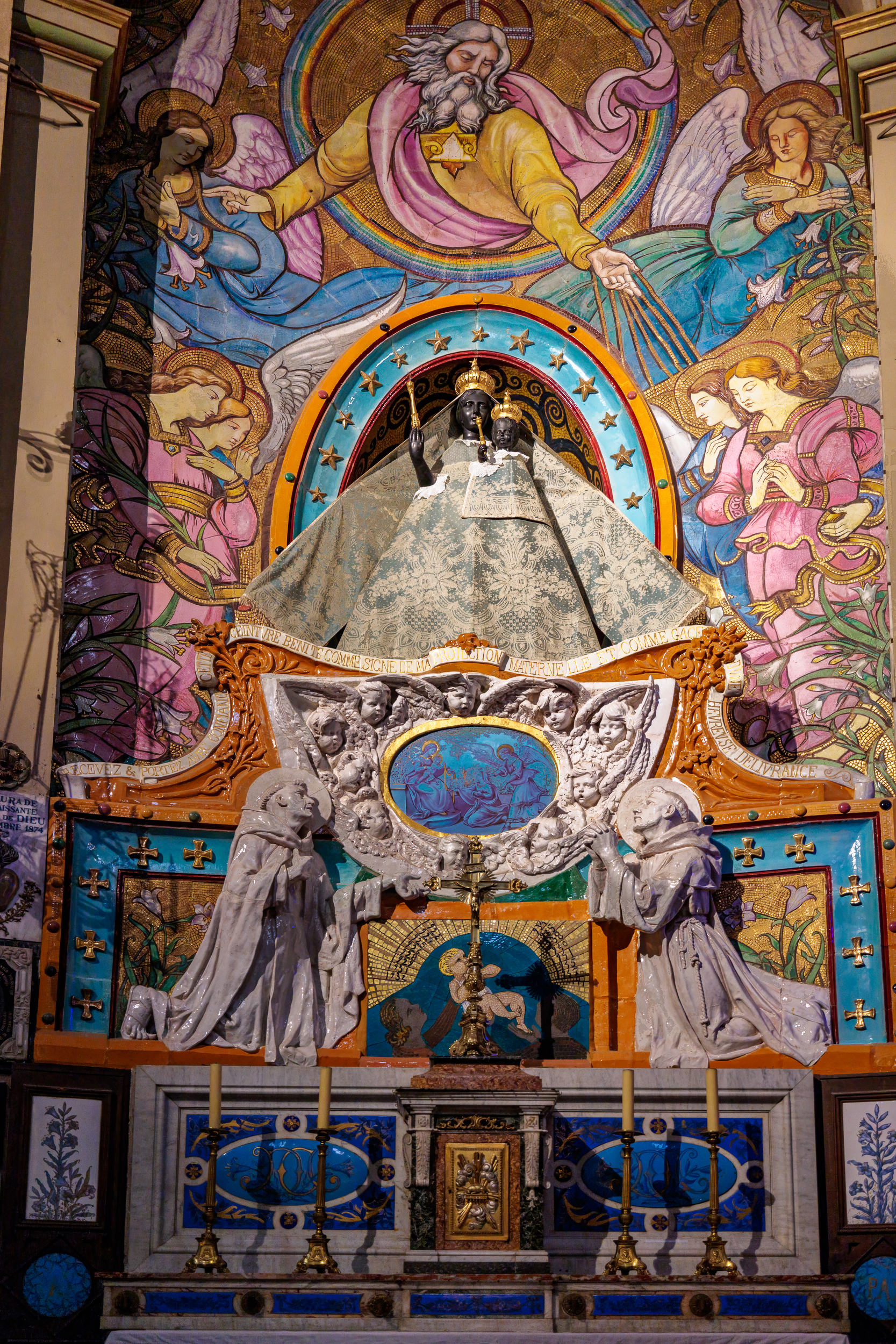
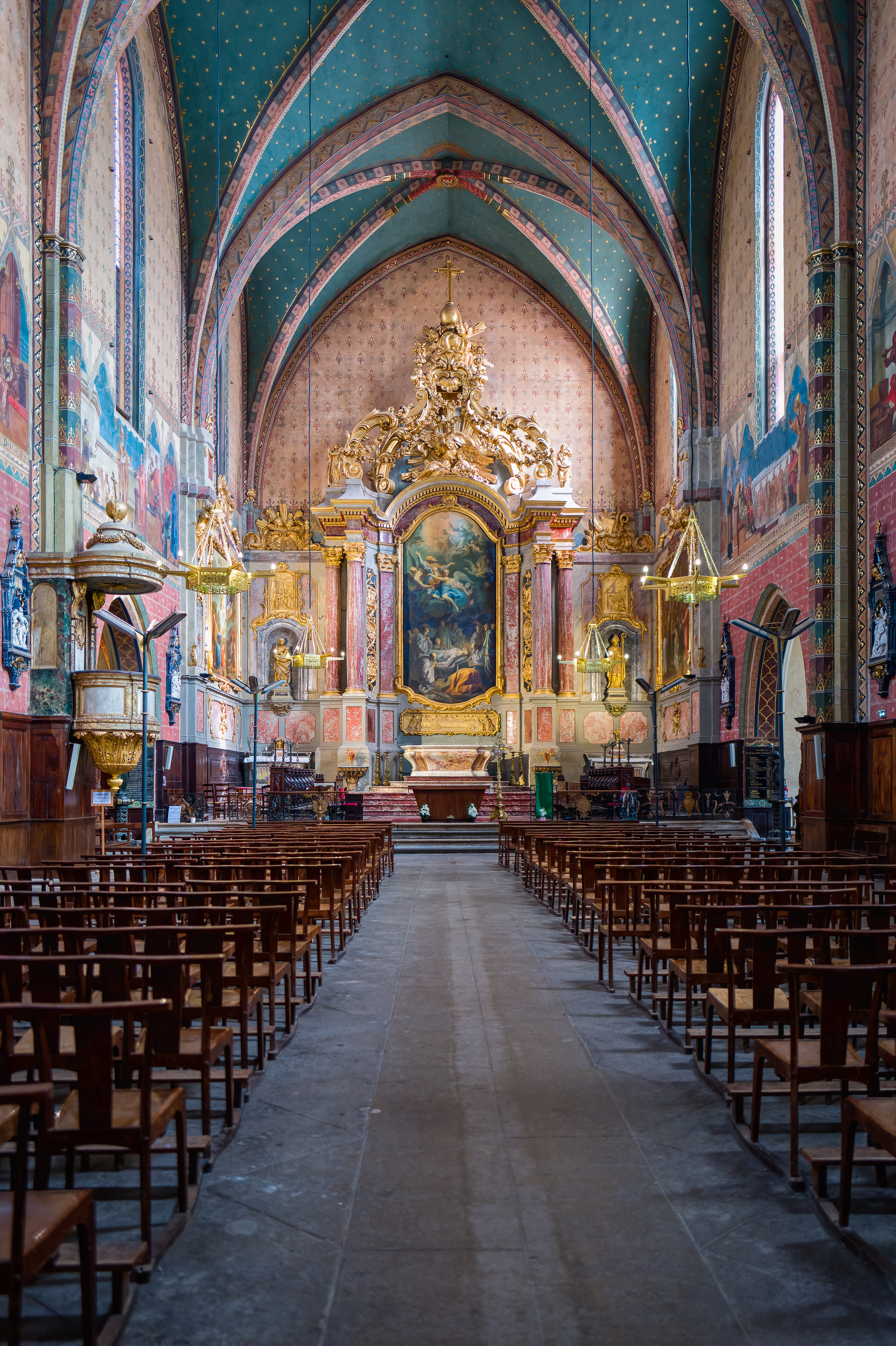
Intérieur de Notre-Dame de la Dalbade, Toulouse - Interior of Notre-Dame de la Dalbade, Toulouse
FR: Fondée au XVe siècle et reconstruite après plusieurs destructions, l’église Notre-Dame de la Dalbade cache derrière sa façade sobre un intérieur d’une grande richesse. Sa voûte bleue étoilée et son retable baroque doré dominent la nef, offrant un contraste saisissant entre austérité extérieure et splendeur intérieure.
EN: Founded in the 15th century and rebuilt after several setbacks, Notre-Dame de la Dalbade conceals behind its plain façade a richly decorated interior. The starry blue vault and gilded Baroque altarpiece dominate the nave, creating a striking contrast between exterior simplicity and interior splendor.
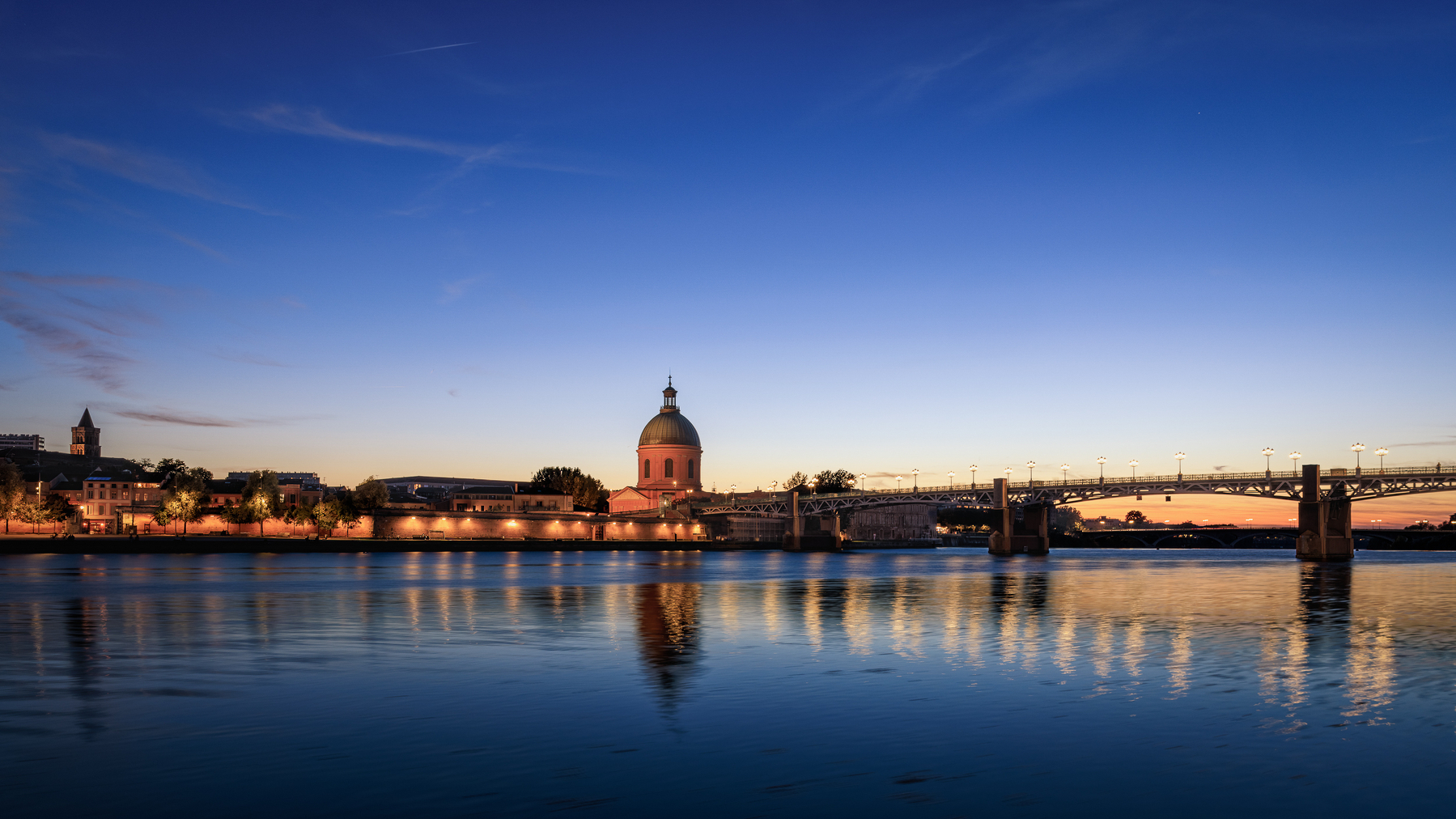
Twilight on the Garonne
EN: The Dôme de La Grave and the Pont Saint-Pierre at twilight, reflected in the calm waters of the Garonne. Toulouse, October 2025.
FR: Le Dôme de La Grave et le Pont Saint-Pierre au crépuscule, reflétés dans les eaux calmes de la Garonne. Toulouse, octobre 2025.
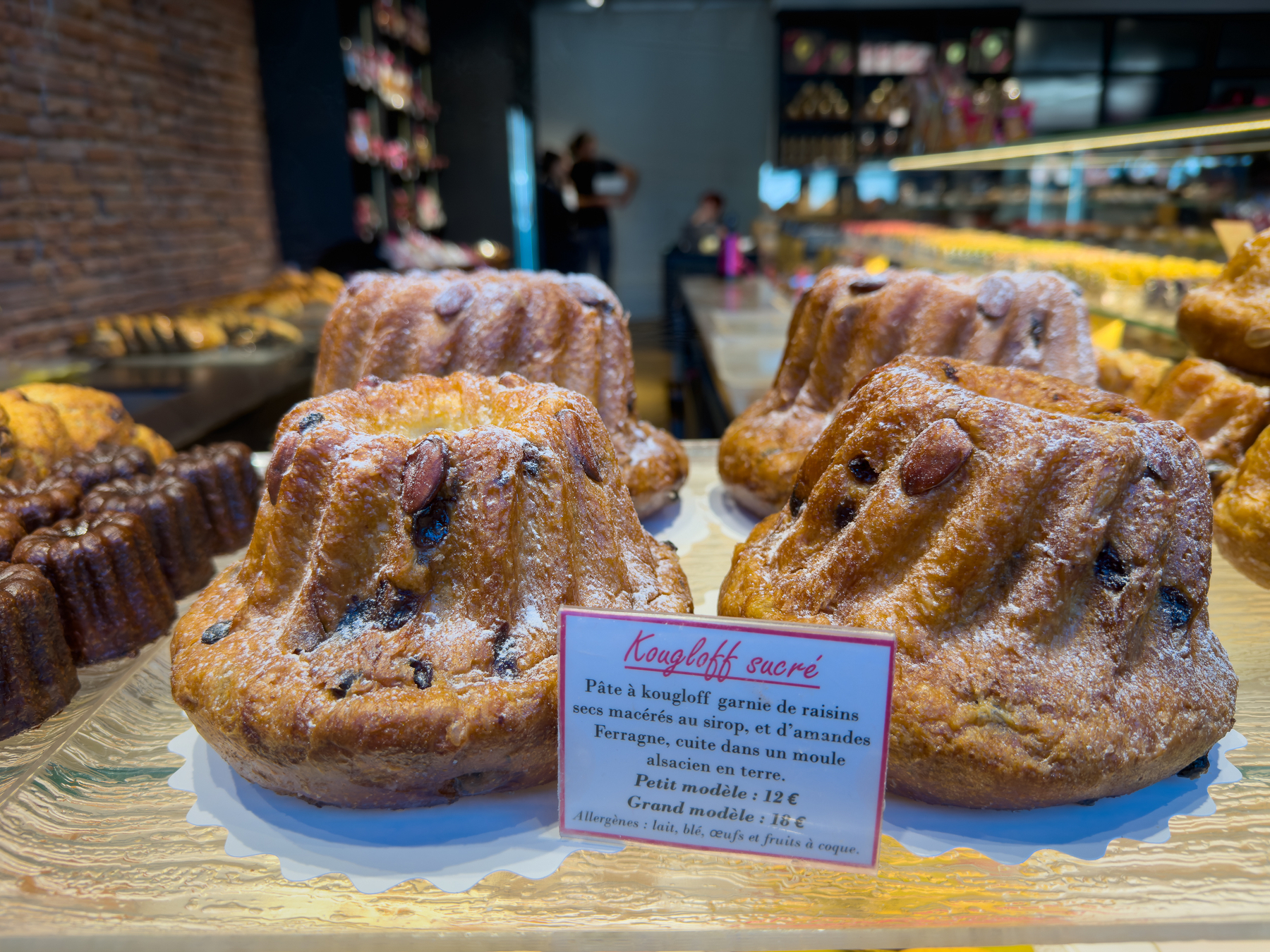
Kouglof in the Morning Light, Toulouse
This morning, I stopped in front of a patisserie window in Toulouse and saw kouglof on display. Golden, dusted with sugar, crowned with almonds — it looked festive and familiar.
I was carried back to childhood memories. Growing up in Pittsburgh, my father used to bring home kugloff made by a very talented pastry chef. It was a rare treat, a cake that felt both special and comforting. I almost never see it at home anymore.
Standing in Toulouse, far from where those memories were made, the sight of kouglof reminded me of him — how food, even across cultures and continents, carries the thread of memory.
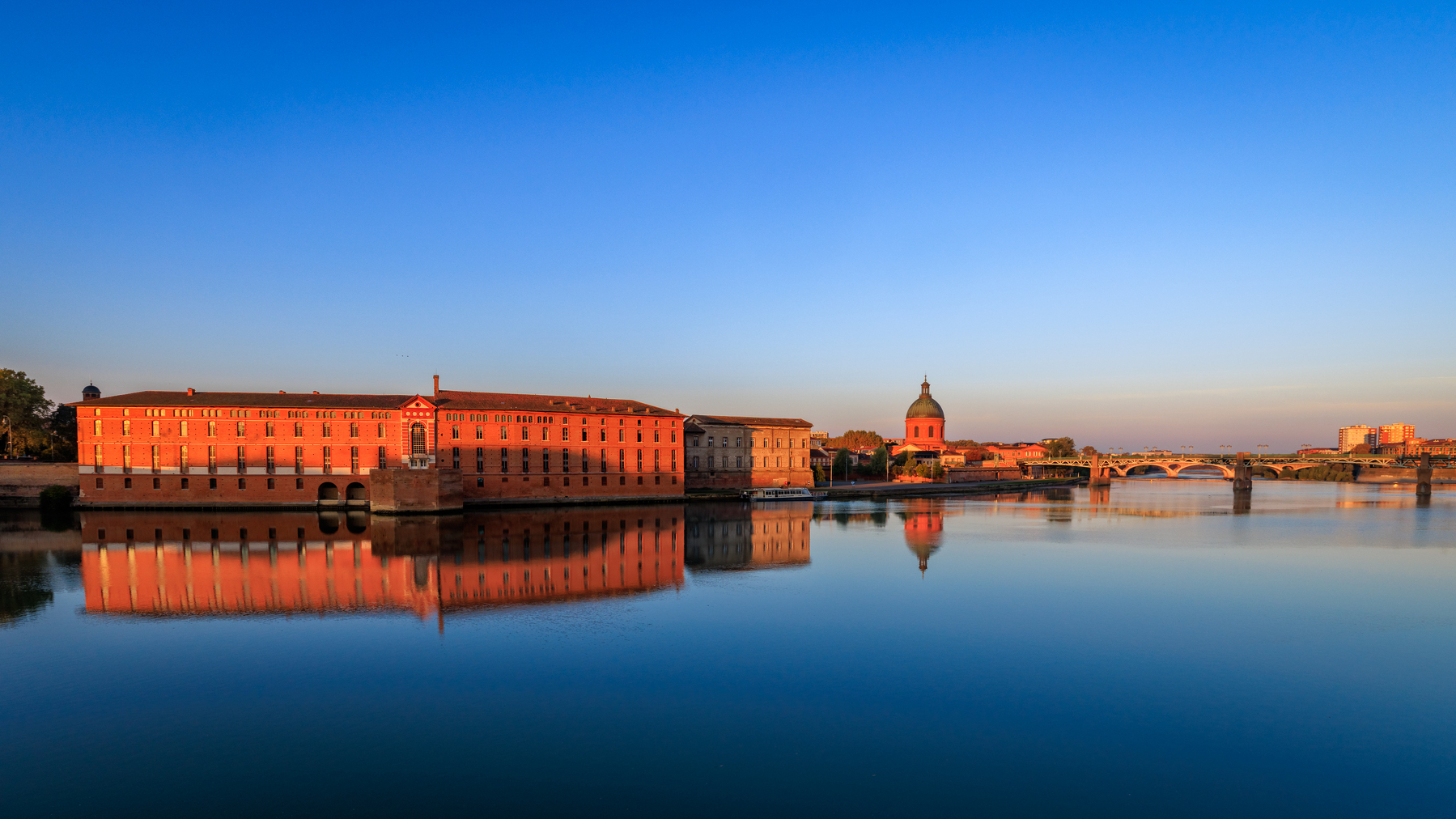
Dawn Reflections on the Garonne, Toulouse
EN: At sunrise, the Hôtel-Dieu Saint-Jacques and the Dome of La Grave glow in warm light, their reflections mirrored in the still waters of the Garonne. The Pont Saint-Pierre frames the scene, a timeless view of Toulouse’s brick architecture and riverside heritage.
FR: Au lever du soleil, l’Hôtel-Dieu Saint-Jacques et le Dôme de La Grave s’illuminent de teintes dorées, reflétées dans les eaux calmes de la Garonne. Le Pont Saint-Pierre complète ce tableau intemporel de l’architecture toulousaine en briques et du patrimoine des quais.
S&P a dégradé la note souveraine de la France Le chaos politique français a un prix.