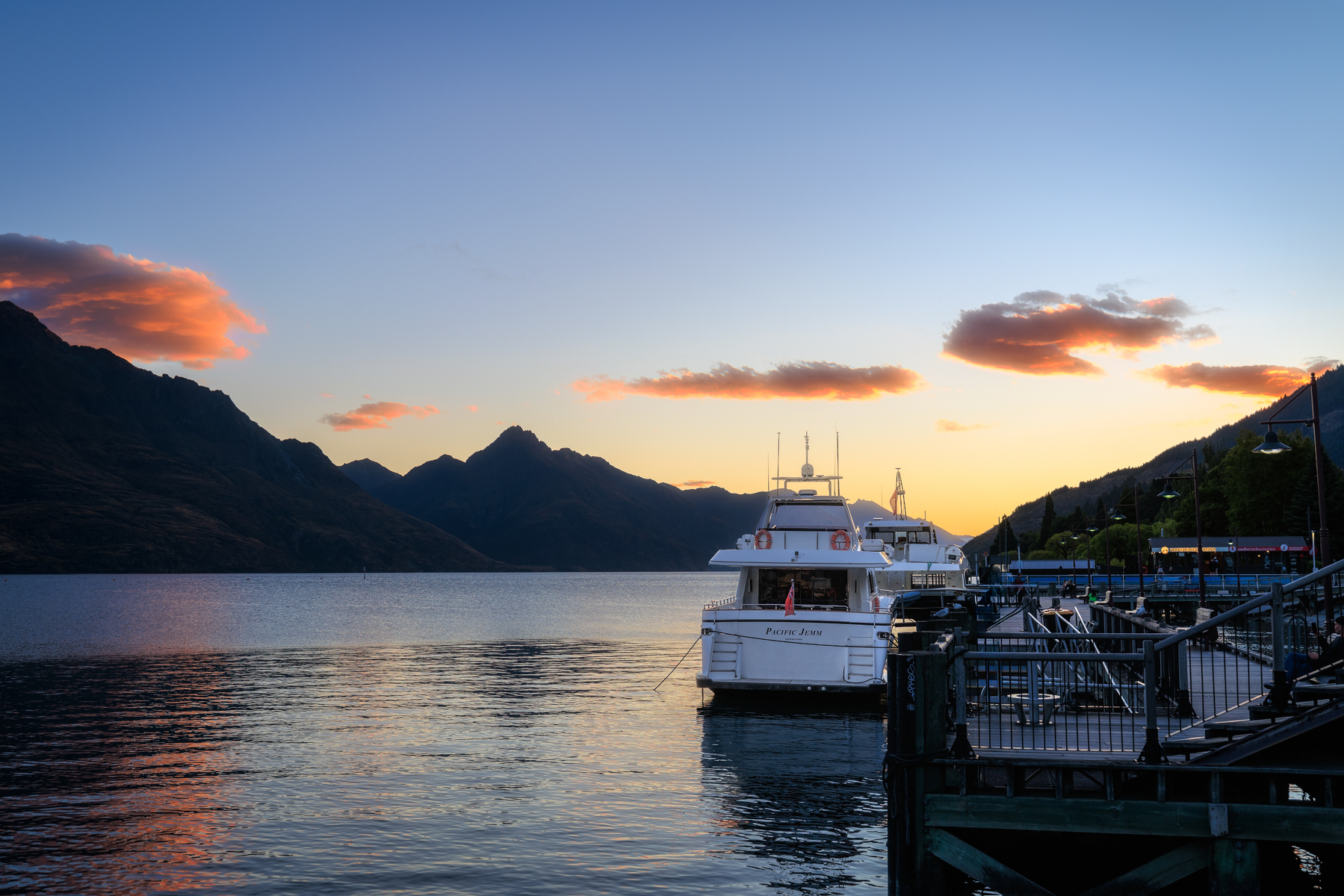
Queenstown at Sunset, Lake Wakatipu
As the sun slipped behind the Remarkables, the water of Lake Wakatipu settled into evening calm. Boats rested at the pier, mountains fell into silhouette, and the last light lingered quietly over Queenstown—less spectacle, more pause.
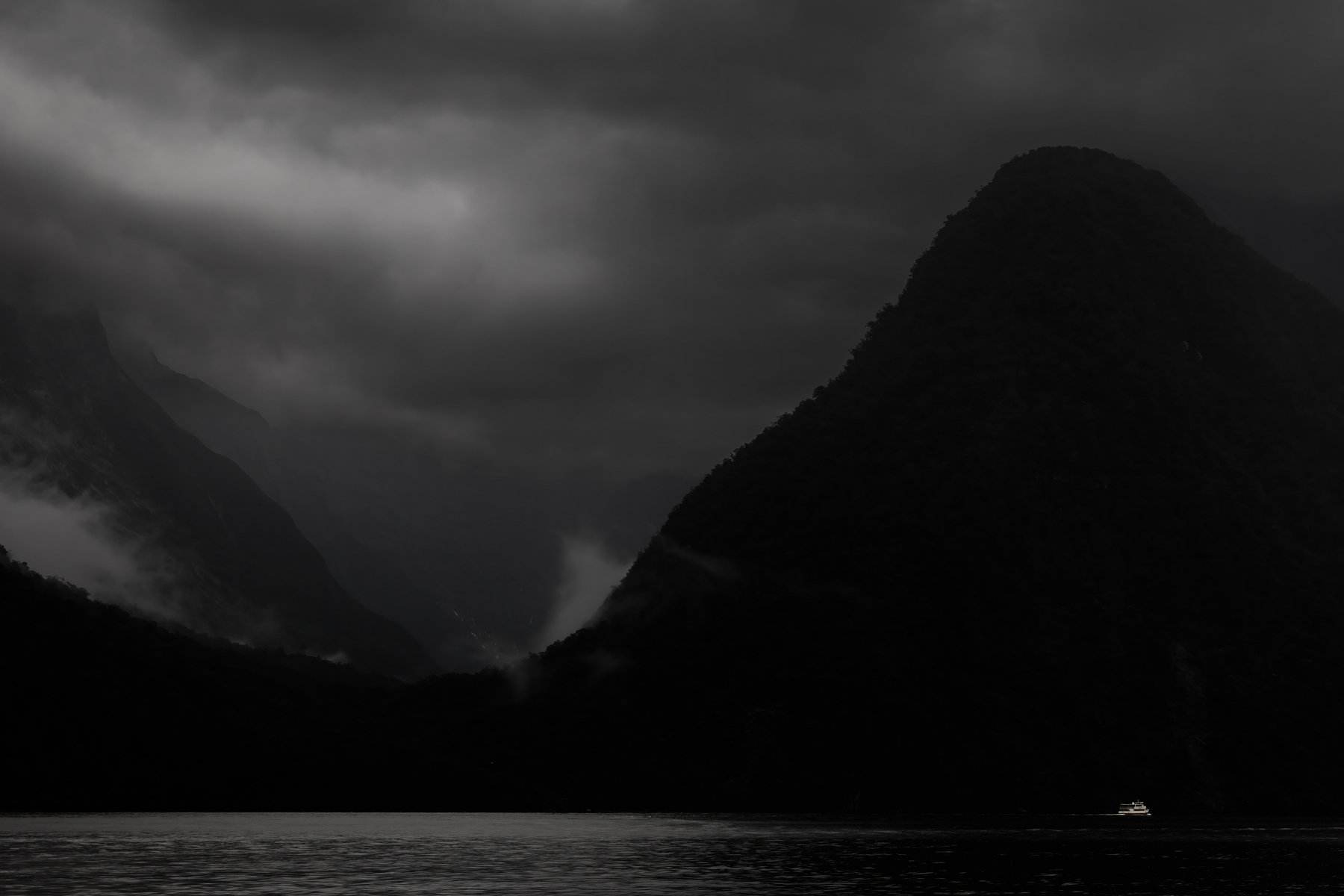
Milford Sound, Passing Light, New Zealand
Milford Sound / Piopiotahi lies on the southwest coast of New Zealand’s South Island within Fiordland National Park. A fiord carved by glaciers during the last ice age and later flooded by the Tasman Sea, it is defined as much by weather as by geology. Low cloud, heavy rain, and brief breaks in light shape how the landscape is seen—and often how little of it is revealed. Here, a tour vessel moves through deep water beneath steep, forested walls, offering a sense of scale within a place that resists clarity.
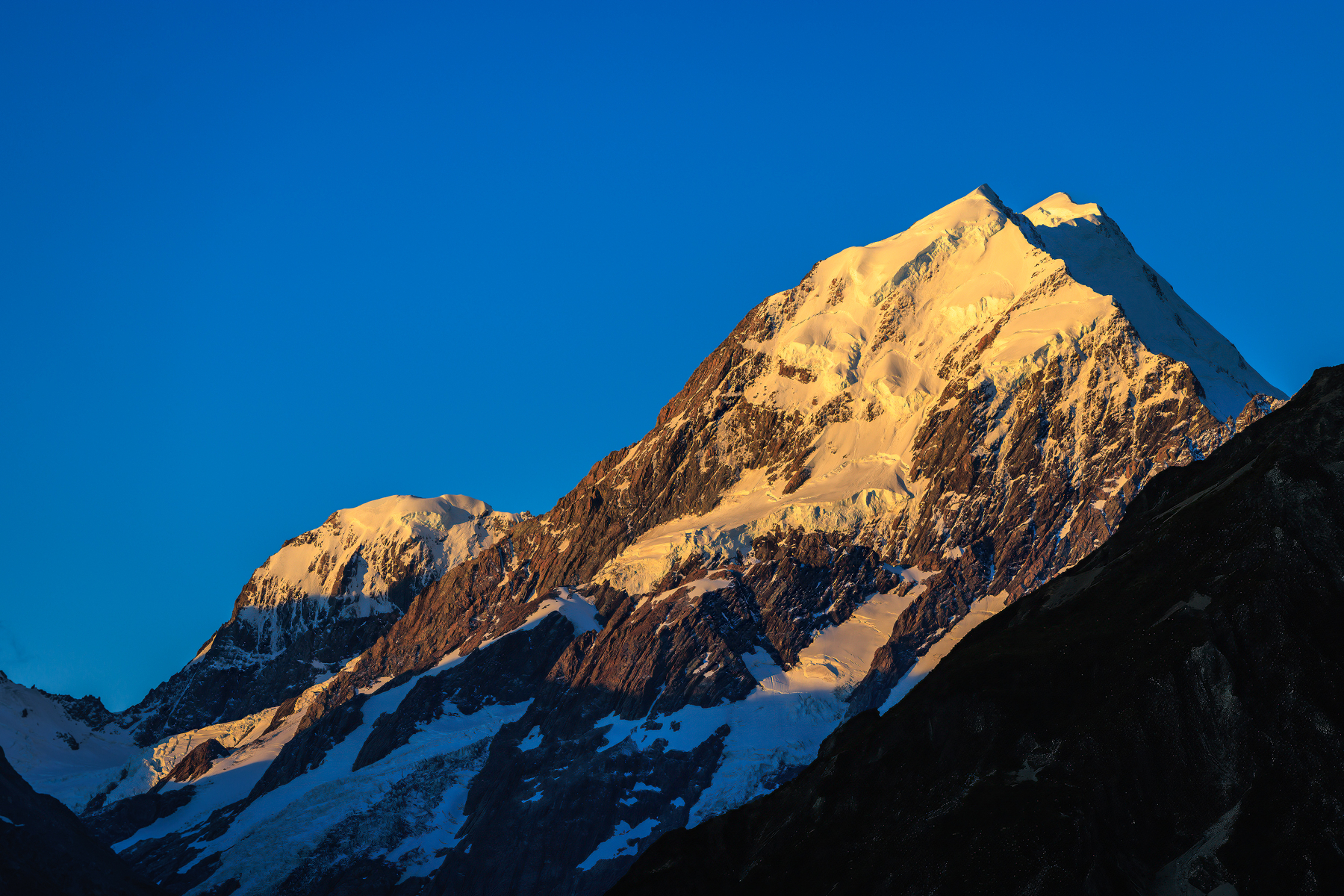
Alpenglow on Aoraki / Mount Cook
Alpenglow settles on Aoraki / Mount Cook at sunset, seen from the Hermitage Hotel in Aoraki Mount Cook National Park. Rising to 3,724 meters (12,218 feet), Aoraki is the highest mountain in New Zealand. As the sun drops, warm light briefly catches the upper snowfields while the lower slopes fall into deep blue shadow—a quiet, fleeting moment that emphasizes the mountain’s scale, structure, and stillness.
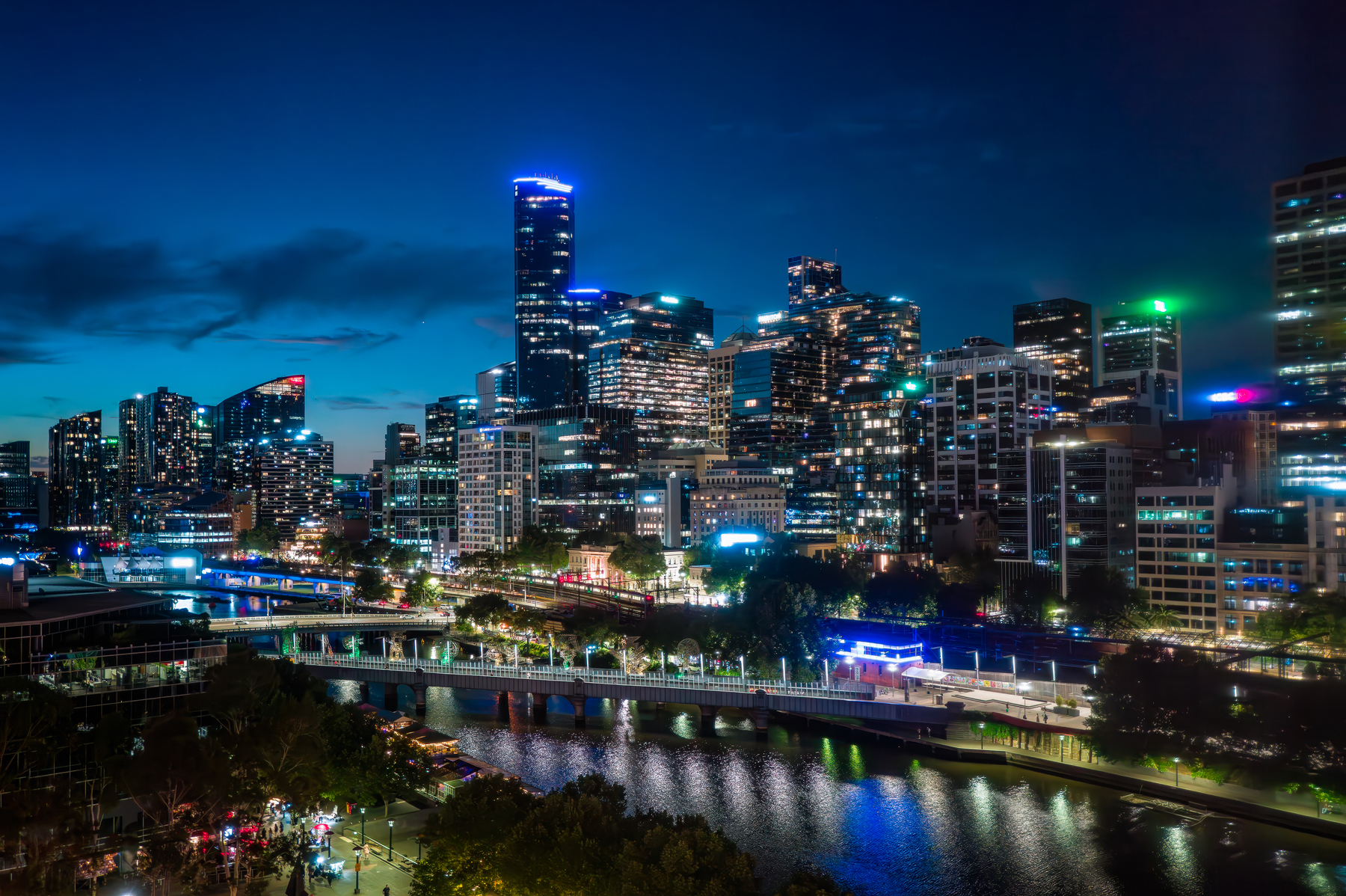
Melbourne, Australia
I just watched Crazy Rich Asians on Netflix before it leaves at the end of the year. I loved it — what an ending.
It’s not important to take the perfect picture. It’s about keeping the mood, the energy, the memory of what’s happening right now.
Toulouse: Light, Stone, and the Quiet Confidence of a Great City
Warm light, quiet streets, rose-colored stone — and a feeling of grace everywhere.
👉 Read the post:
www.dhescrpt.com/toulouse-…
Why Did I Wait So Long?
After years of saying, “One day I’ll get a 13-inch MacBook Air,” I finally did it. Costco dangled a Black Friday deal in front of me, and—what can I say—I blinked first.
And you know what? I’m delighted.
This light blue MacBook Air is small, light, and honestly… adorable. It’s the kind of computer that makes you want to leave the house, wander to a coffee shop, and type something—anything—just because it’s fun to use. It slips into a bag without the usual negotiation about weight, bulk, or whether I really want to carry a laptop today.
No, it’s not the most powerful Mac in the lineup. And the screen isn’t the luscious, movie-theater-in-your-lap panel of the Pro models. But the battery just keeps going, the machine stays quiet, and it runs full Mac apps without complaining. Best of all, it has an actual, comfortable keyboard—something my iPad, as much as I enjoy it, never quite replaces.
After a few days with it, I’m left with a single question: why did I wait so long? Sometimes I don’t need the “Pro.” Sometimes I just want something light, friendly, and ready to go anywhere.
The MacBook Air is exactly that. And I think it’s going to get a lot of coffee shop miles. ☕️
Yesterday, I bought a pair of Sony headphones (WH-1000XM5SA) on sale at Costco. I am very impressed. They sound and feel great. They are lighter and more comfortable than my AIrPods Pro Max with lightening which in any event stopped working yesterday.
A Brother’s Hand
At the Vietnam Veterans Memorial on Veterans Day 2025, one veteran reaches out to another in a quiet moment of connection and remembrance — a gesture that speaks to loyalty and shared history that time can’t erase.

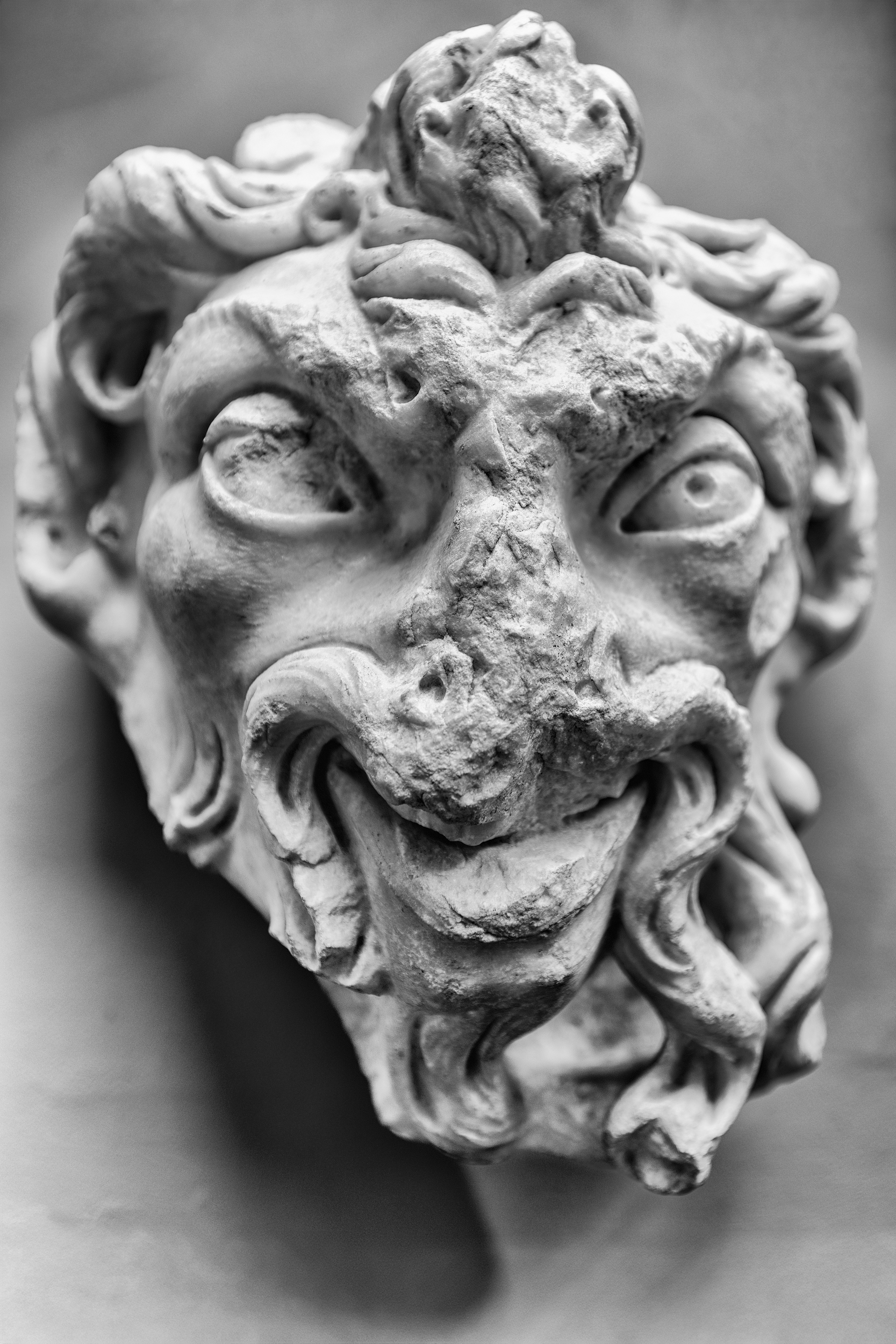
Musée Saint-Raymond, Toulouse
EN: Photographed at the Musée Saint-Raymond in Toulouse, this expressive sculpted head once adorned a Roman building or fountain. The museum, housed in a 16th-century college beside the Basilica of Saint-Sernin, is dedicated to archaeology and the ancient civilizations of southwestern France, particularly the Gallo-Roman city of Tolosa. Its collection preserves the traces of daily life, art, and belief from antiquity — reminders of how the human face and imagination endure across millennia.
FR: Photographié au Musée Saint-Raymond à Toulouse, ce visage sculpté, à l’expression à la fois ironique et troublante, ornait autrefois un édifice ou une fontaine romaine. Installé dans un ancien collège du XVIᵉ siècle, à côté de la basilique Saint-Sernin, le musée est consacré à l’archéologie et aux civilisations antiques du sud-ouest de la France, notamment à la ville gallo-romaine de Tolosa. Sa collection retrace la vie, l’art et la pensée du monde antique — témoignage de la permanence du visage humain à travers le temps.
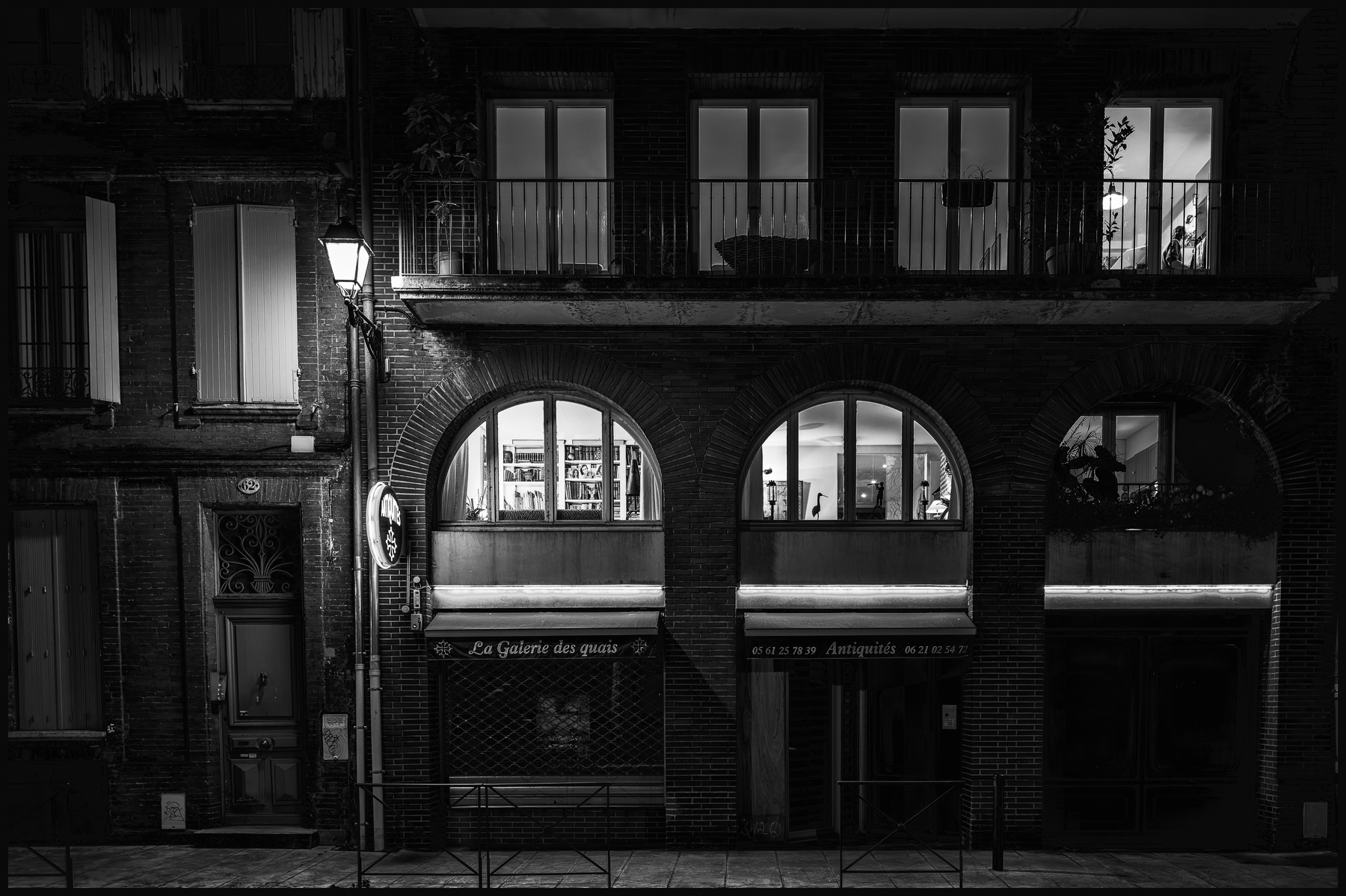
Windows of the Night – Toulouse - Fenêtres de la nuit
EN: In the quiet streets of Toulouse, the closed shops give way to illuminated windows, revealing fragments of private lives. Between darkness and light, the city tells its hidden stories.
FR: Dans les rues silencieuses de Toulouse, les boutiques closes laissent place à des fenêtres illuminées, dévoilant des fragments de vies intimes. Entre ombre et lumière, la ville raconte ses histoires cachées.
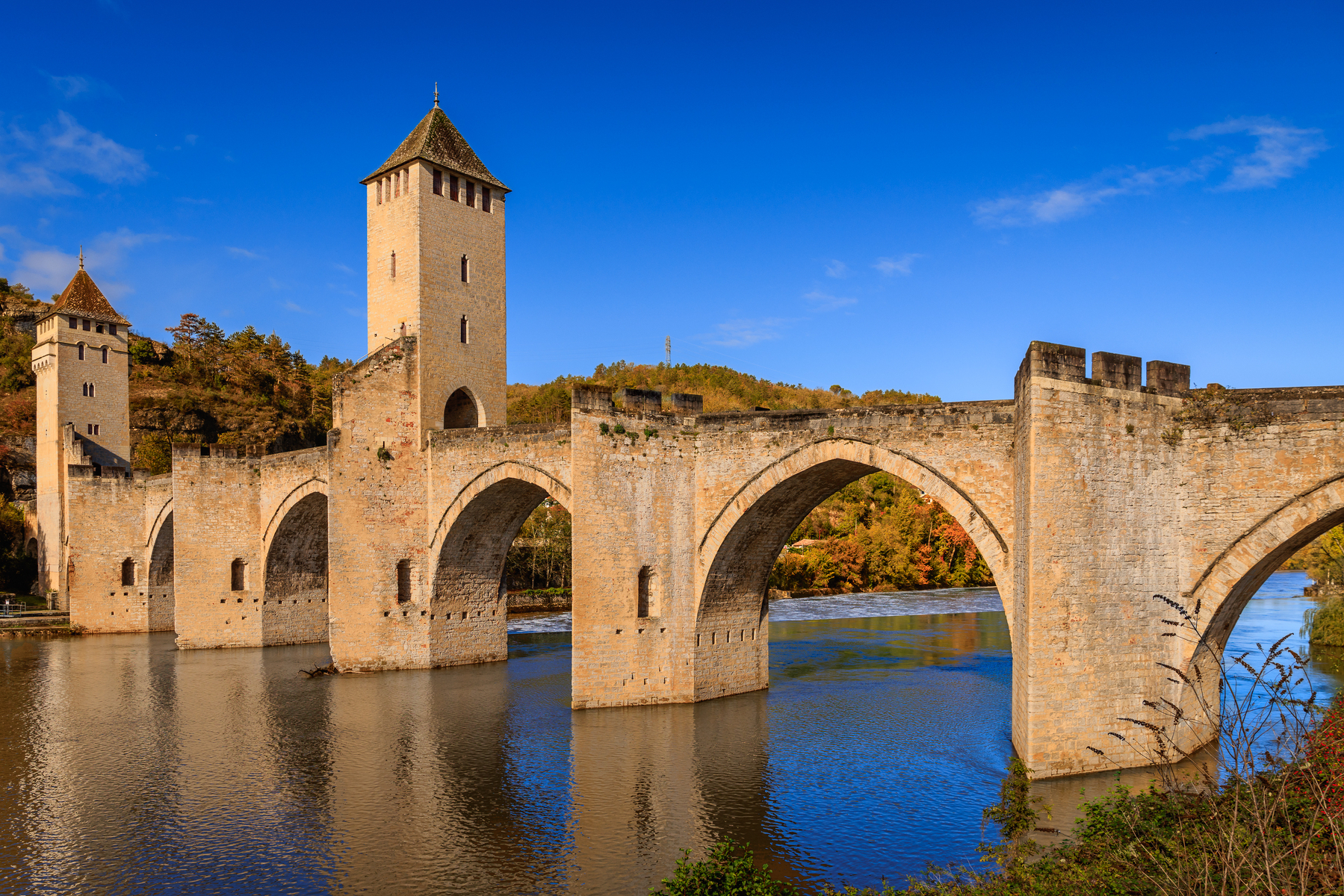
Pont Valentré, Cahors
EN: Spanning the Lot River since the 14th century, the Pont Valentré is one of France’s finest fortified medieval bridges. With its six arches and three towers, it stood as both a defensive structure and a symbol of Cahors’ prosperity. Legend tells that the architect, desperate to finish the bridge, made a pact with the Devil — a tale now inseparable from its identity.
FR: Depuis le XIVᵉ siècle, le pont Valentré enjambe le Lot et demeure l’un des plus beaux ponts fortifiés médiévaux de France. Avec ses six arches et ses trois tours, il était à la fois ouvrage défensif et symbole de la prospérité de Cahors. La légende raconte que l’architecte, désespéré de l’achever, conclut un pacte avec le diable — une histoire devenue indissociable de son identité.
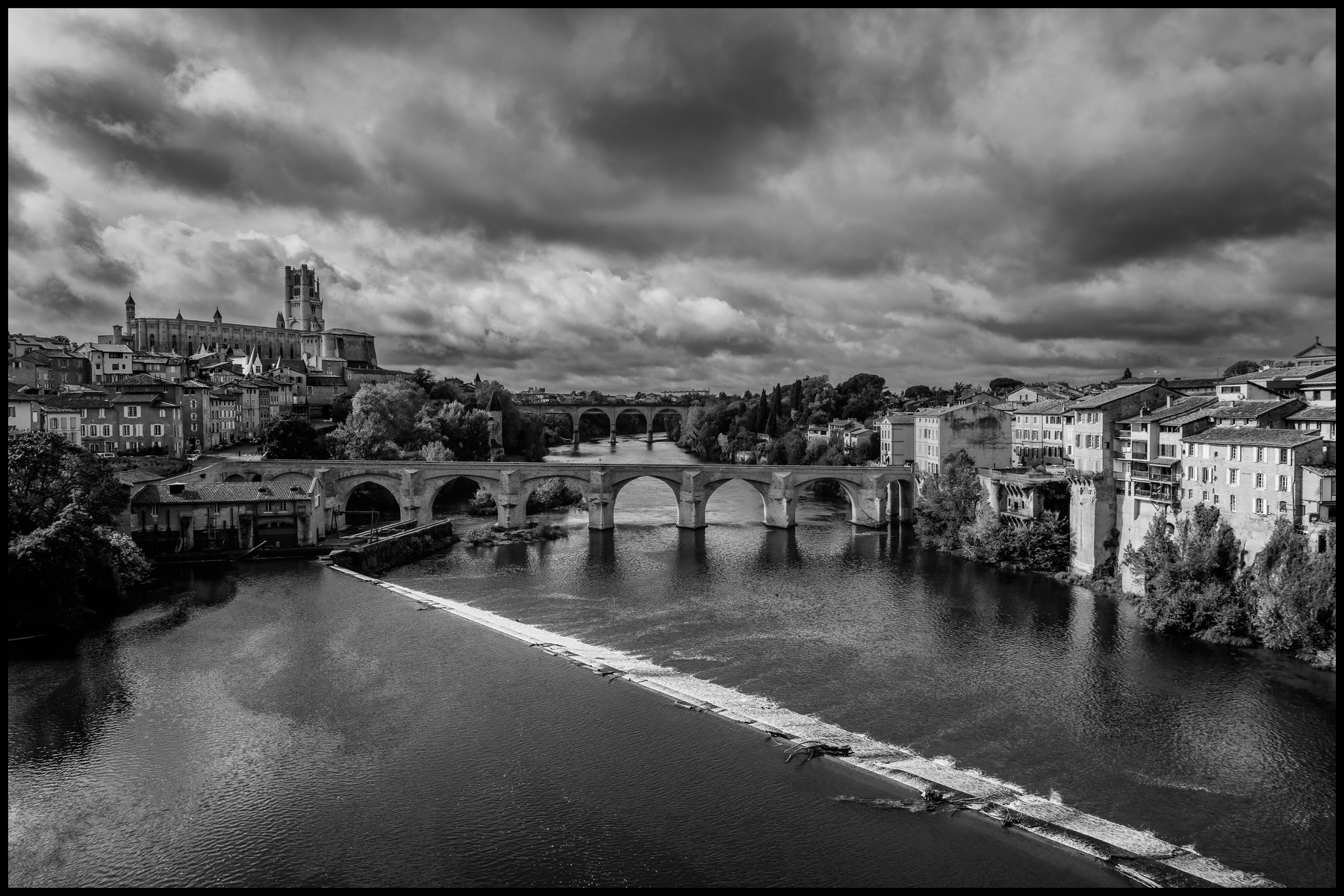
Albi, France
EN: In Albi, the Tarn flows beneath the Pont Vieux, a medieval bridge from the 11th century. Rising above the town is the Cathedral of Sainte-Cécile, the world’s largest brick cathedral and a symbol of the city’s enduring faith and history.
FR: À Albi, le Tarn s’écoule sous le Pont Vieux, pont médiéval du XIᵉ siècle. Dominant la ville, la cathédrale Sainte-Cécile, plus grande cathédrale de brique au monde, incarne la puissance et la mémoire de la cité.
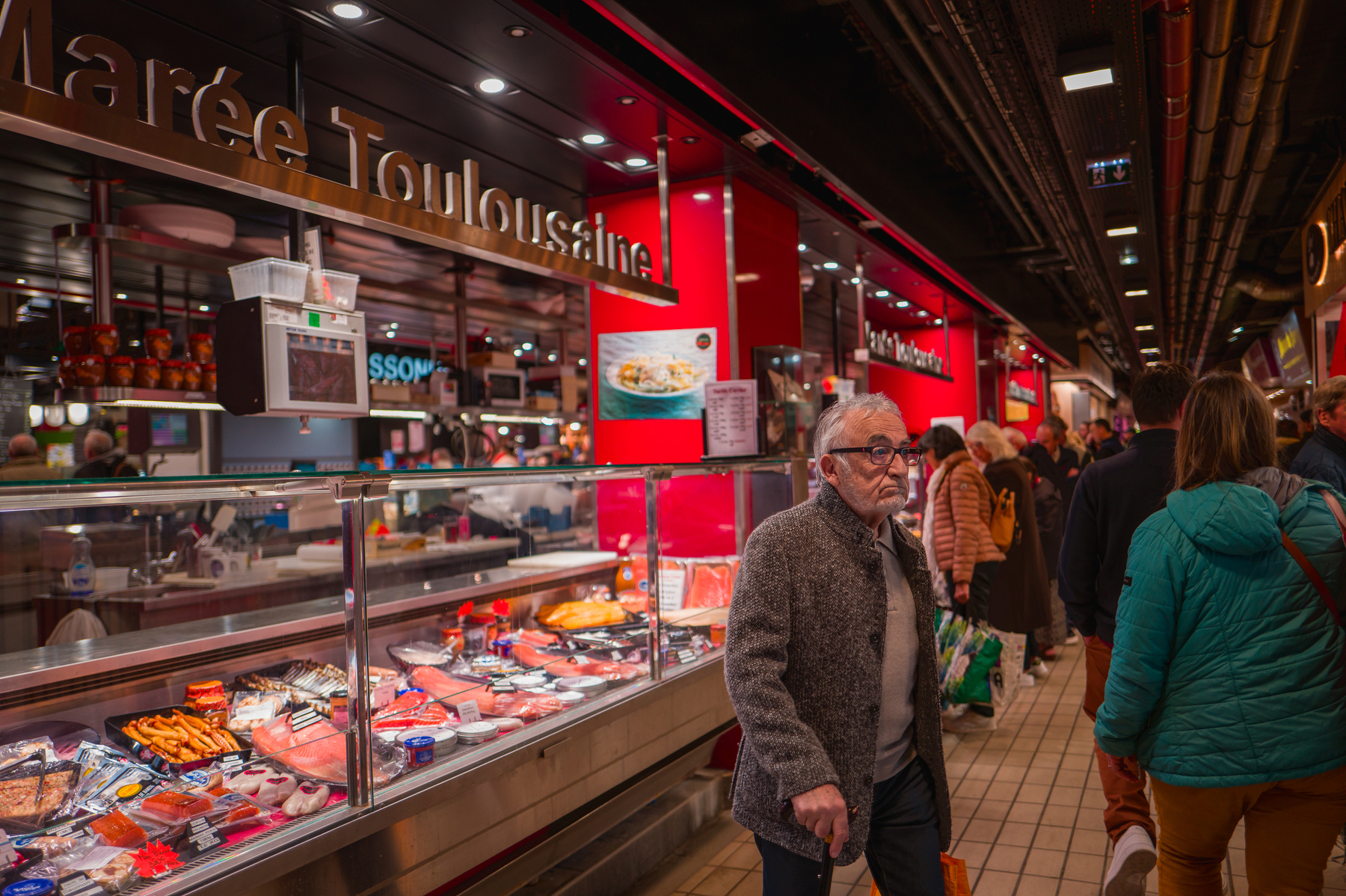
Tradition in Motion – Marché Victor Hugo, Toulouse Tradition en mouvement – Marché Victor Hugo, Toulouse
EN: Opened in 1896 and rebuilt in the 20th century, the Marché Victor Hugo remains the beating heart of Toulouse’s culinary life. Generations of vendors and customers gather here daily, weaving together tradition and modernity. With its vibrant red stalls and overflowing counters, it reflects both the city’s history and its ongoing passion for gastronomy.
FR: Ouvert en 1896 et reconstruit au XXᵉ siècle, le marché Victor Hugo demeure le cœur battant de la vie culinaire toulousaine. Depuis des générations, commerçants et clients s’y retrouvent chaque jour, mêlant tradition et modernité. Avec ses étals rouges éclatants et ses comptoirs bien garnis, il reflète à la fois l’histoire de la ville et sa passion toujours vivante pour la gastronomie.
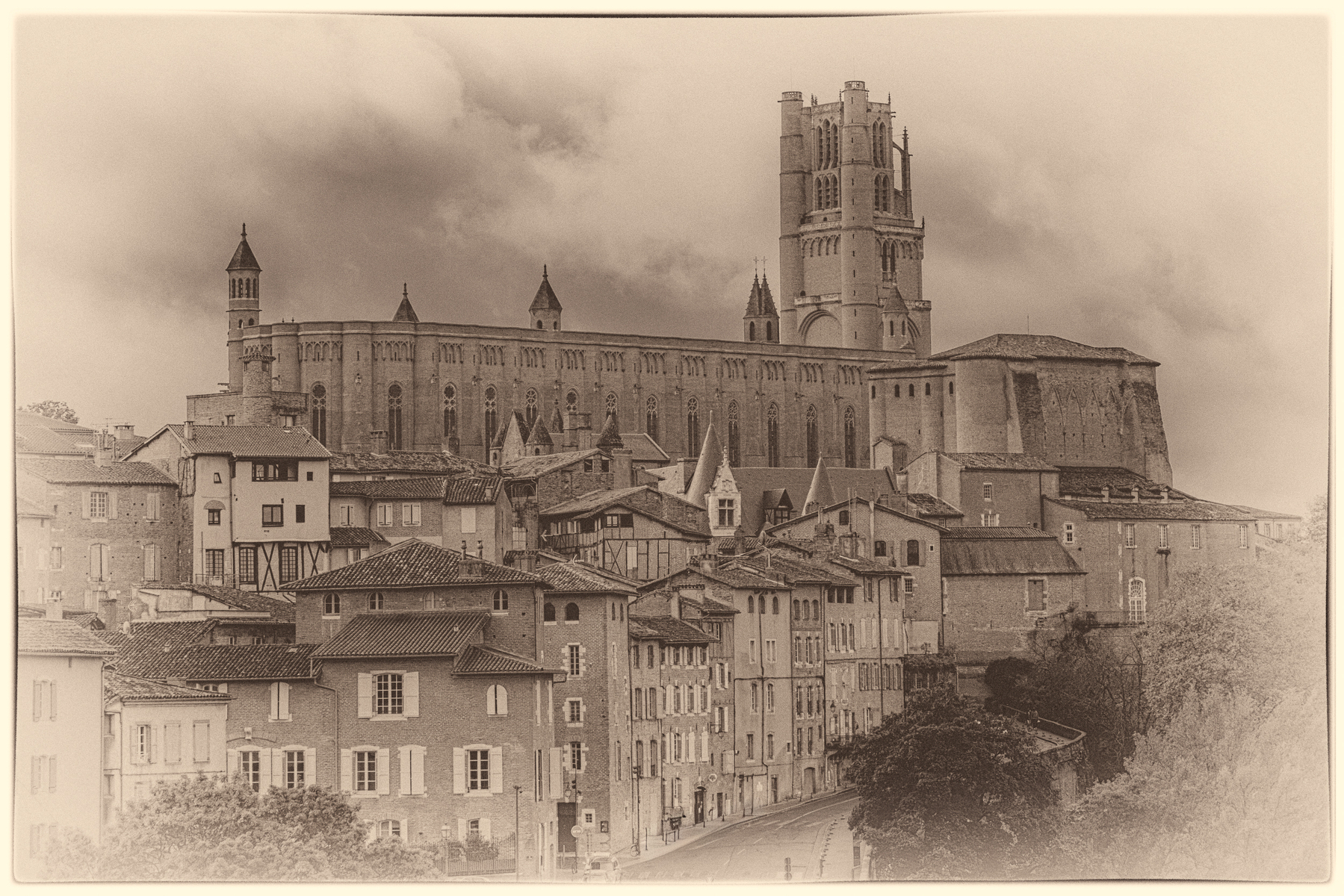
Cathédrale Sainte-Cécile – Albi
EN: The Cathedral of Sainte-Cécile rises above the old town of Albi, a masterpiece of southern Gothic architecture built entirely of brick. The sepia tones recall its enduring presence through the centuries.
FR: La cathédrale Sainte-Cécile domine la vieille ville d’Albi, chef-d’œuvre du gothique méridional entièrement construit en brique. Le ton sépia évoque sa présence immuable au fil des siècles.
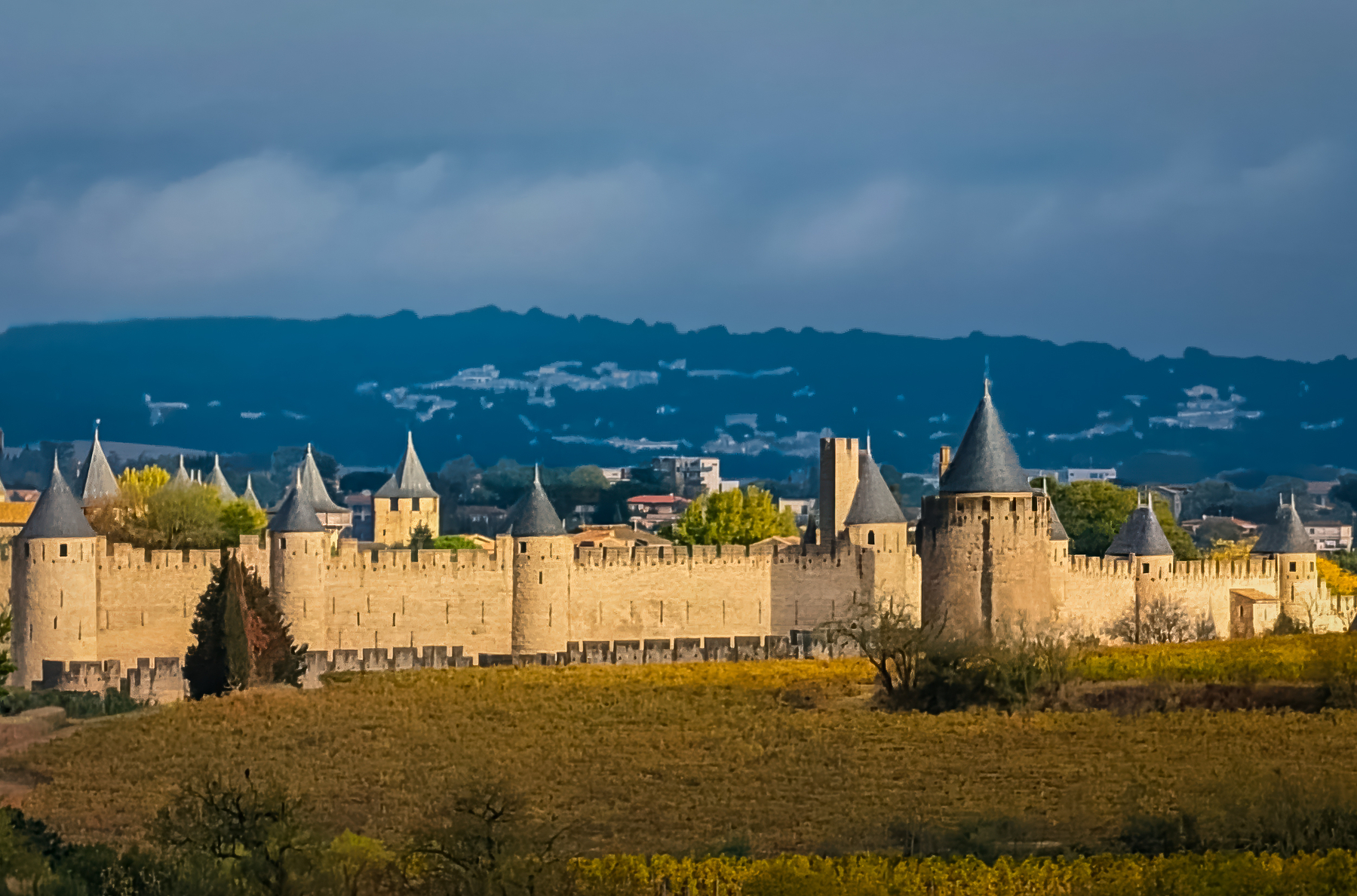
Carcassonne
EN: Carcassonne, a UNESCO World Heritage Site in southern France, is famed for its medieval double walls and 52 towers. Restored in the 19th century, the fortress rises from the landscape like a vision — stone glowing against the weight of sky, a living echo of Europe’s medieval past.
FR: Carcassonne, inscrite au patrimoine mondial de l’UNESCO dans le sud de la France, est célèbre pour sa cité médiévale fortifiée, protégée par des doubles remparts et 52 tours. Restaurée au XIXᵉ siècle, la forteresse se dresse dans le paysage telle une apparition — la pierre illuminée sous la lourdeur du ciel, résonance vivante du passé médiéval de l’Europe.
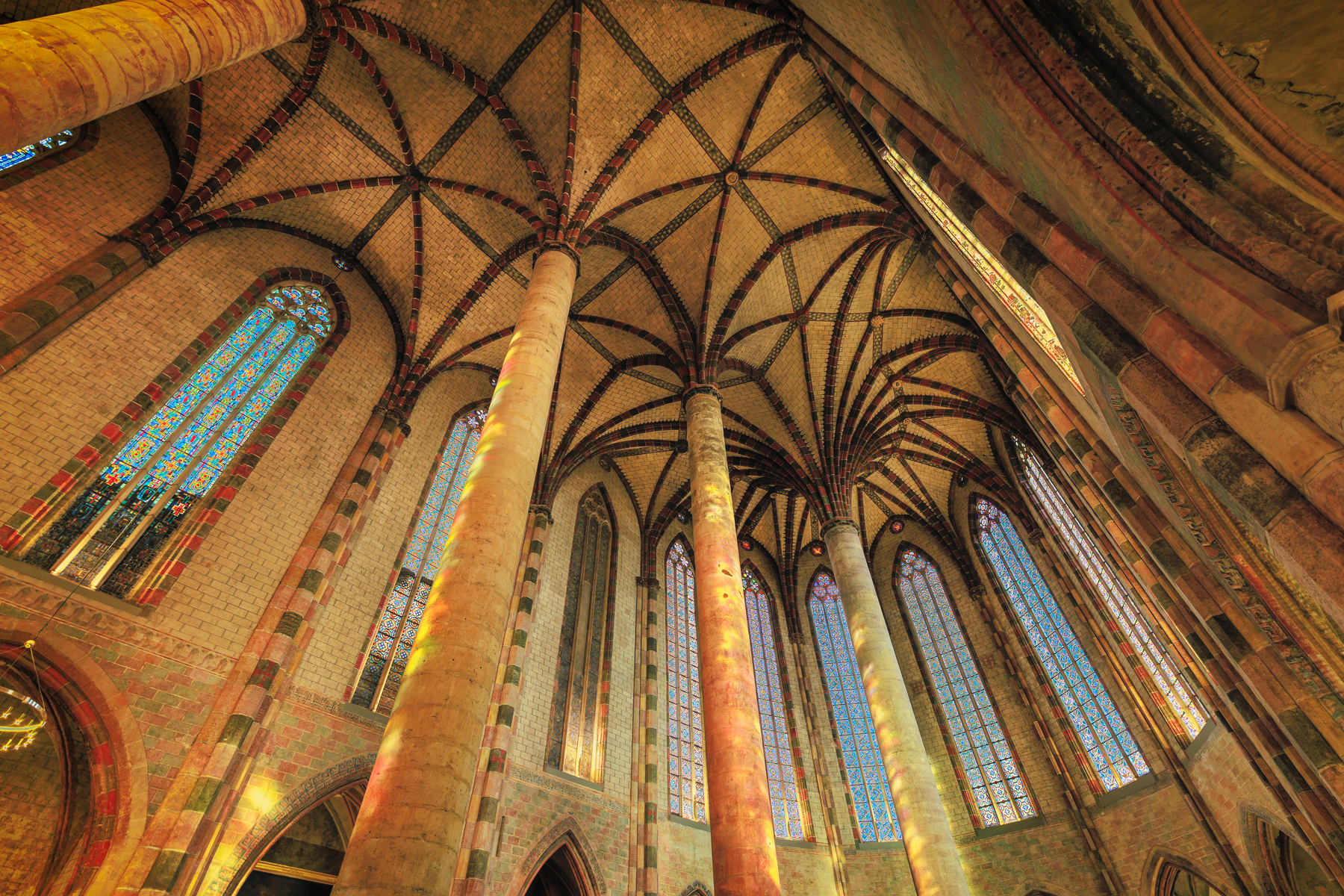
Couvent des Jacobins – Toulouse
EN: Built between 1230 and 1350, the Couvent des Jacobins in Toulouse is a masterpiece of Southern Gothic architecture. Its “palm-tree” vault and colorful stained glass transform the interior into a space where stone and light seem to breathe together.
FR: Construit entre 1230 et 1350, le Couvent des Jacobins de Toulouse est un chef-d’œuvre du gothique méridional. Sa voûte en forme de palmier et ses vitraux colorés créent une atmosphère unique où la pierre semble vibrer à la lumière du soleil couchant.